
Zelda: Tears of the Kingdom dev discusses how one of the bosses was made
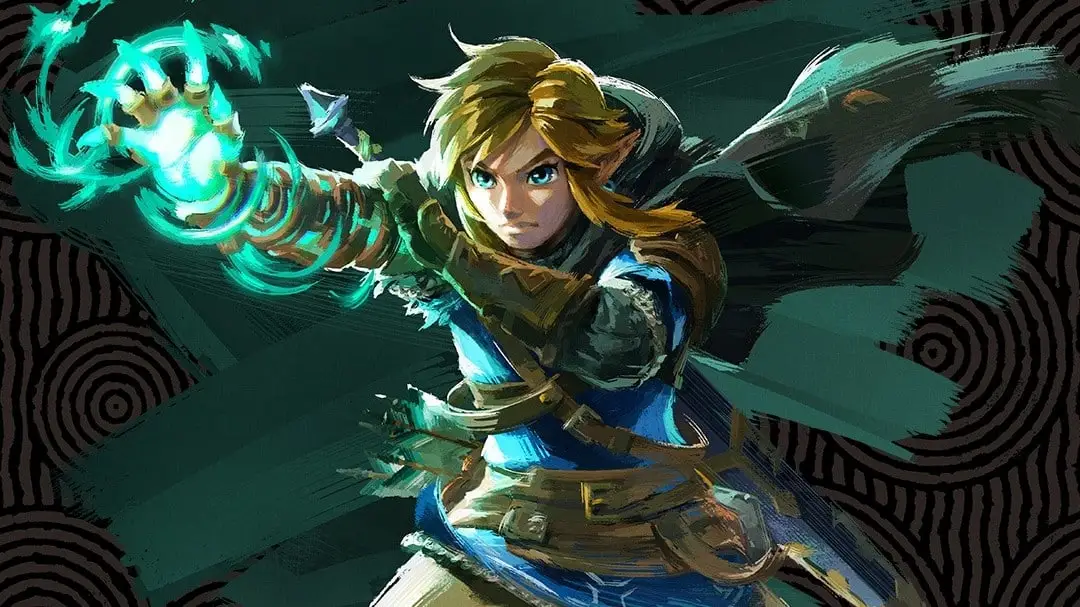
In a post on Nintendo’s recruitment website, notable insight was shared into the making of a boss for The Legend of Zelda: Tears of the Kingdom. Designer Takuma Tokita published the piece.
Tokita spoke about the importance of enemy design as that impacts gameplay. In making these creatures, a key focus for the developer is “visually conveying how to best an enemy’s attacks in the design.”
We won’t get into details so that we can avoid spoilers, but much of Tokita’s piece covers the game’s Fire Temple boss. We have a full translation below.
Visually Communicating Hints for Defeating Enemies
I joined this company as a character designer, and have primarily been responsible for designing enemies. In the first project I was responsible for after joining, The Legend of Zelda: Tears of the Kingdom, I designed seven enemy characters.
For games in the action adventure genre like Zelda, “enemies” are indispensable. The strategy involved in defending against enemy attacks and defeating them increases players’ tension, leading to a better game experience. The design of enemy characters is tightly linked to gameplay, and the process of making an enemy interesting to fight feels a bit like making a tiny game in and of itself. While designing, something that I pay particular attention to is visually conveying how to best an enemy’s attacks in the design.
For example, in the Fire Temple, there is a boss called the Marbled Gohma, and the task while designing this enemy was to make it so that it could be defeated with Yunobo’s (the Goron Sage) rolling attack in the dome-shaped stage. As I considered how the battle would unfold in order for the gameplay to be fun, I drew up a design proposal for a monster that was a four-legged crustacean.
A designer’s job is not just making 3D models from design proposals, but also to explore how the gameplay feels, then considering how to make the design fit the gameplay over and over. To be more specific, I created a 3D model based on this design proposal, then after having it move around in a dome-shaped arena, I made various improvements to it. The Marbled Gohma’s weak spot is its giant eyeball, but normal attacks cannot reach it since it is located high up.
Therefore, we made it so that you needed to first destroy its legs using your ally Yunobo’s rolling attack. However, when we actually playtested it, the legs were too thin and difficult to hit, so we learned that that would be a source of stress for the player. Thus, to make the legs easier to destroy, I made its legs thicker than in the proposal, and adjusted the animations so that its legs were set on the ground for longer.
On top of appearances, movements from animations are also an important factor connected to ease of gameplay.
Also, the protagonist Link has an ability, Ascend, that lets him pass through ceilings. To allow this ability to be used, the torso was designed as a flat shape to let players stand on it. In order for players riding on it to reach the eyeball, the shape of the outer shell was made to be different from the crustaceans that the Marbled Gohma is based on. Besides this, plenty of other parts of the design underwent repeated playtesting and adjustments while more detail was added, and the Marbled Gohma was finally completed. Just like that, we have to actually play with the character we create, then continue to brush it up while keeping the playtest experience in mind, and one can really feel the importance of this process for finishing designs.
The True Essence of Creating Gameplay with a Team
The team responsible for designing enemies creates the core gameplay with the bare minimum number of designers, planners and programmers, and the products are checked by the whole team, including the leader. The product is reworked based on whatever feels out of place or new ideas, finally reaching completion.
Our products, completed through trial and error, were well-received by the director, and since we maintained a greater sense of direction as we created, we felt a great sense of achievement in designing bosses.
Something else you might be interested to know is that The Legend of Zelda: Tears of the Kingdom almost had Tears of the Dragon as its subtitle. You can read more about that here.
Translation provided by SatsumaFS, Philip Proctor, and Simon Griffin on behalf of Nintendo Everything.


