
Dragon Quest 7 Reimagined review for Nintendo Switch 2
System: Switch 2
Release date: February 5, 2026
Developer: Square Enix / HexaDrive
Publisher: Square Enix
Dragon Quest 7 is a game with a reputation. A reputation for what, may you ask? A reputation for being one of the longest slogs not only in Dragon Quest history, but in the history of traditional JRPGs as a whole. As Square Enix continually looks into its long history for games that modernize and enhance for a modern audience, there are few title in their catalog more in need of a refresh than this one. So it was with much rejoicing that Dragon Quest 7 Reimagined was announced last year. The question we must ask ourselves, now that the game has finally arrived on store shelves, is can Square Enix do enough to turn this controversial entry in its longest-running series into yet another beloved remaster?
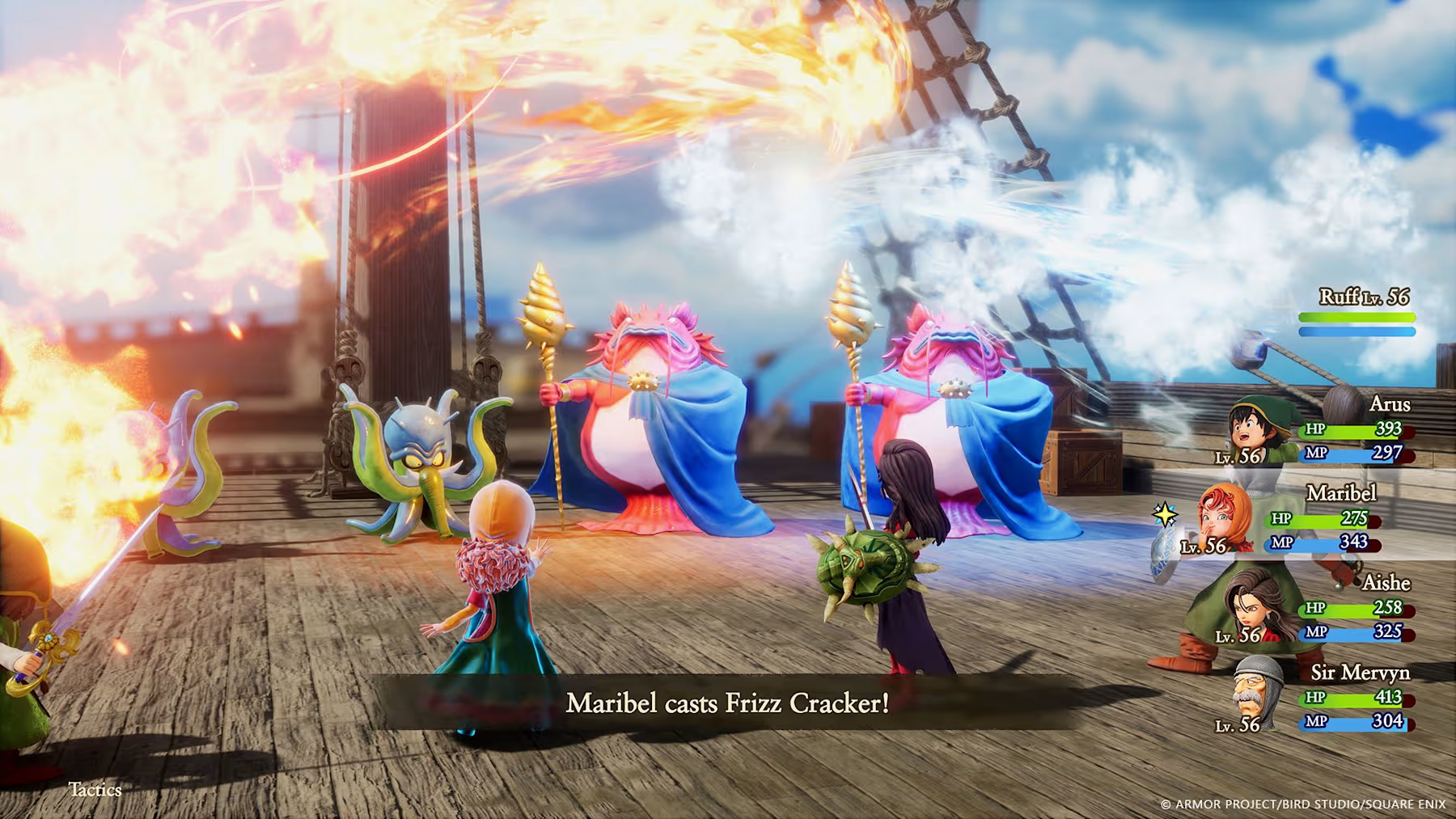
Dragon Quest is a series largely untouched by time, returning the same well of beloved gameplay mechanics, combat systems, storytelling tropes, and other genre-defining elements that have made it one of the most beloved RPG franchises in the world. For those who love these systems, Dragon Quest 7 is a dream. The game is tightly polished, from its vibrant art style, catchy soundtrack, well balanced character progression, and familiar, turn-based combat. It’s clear from the beginning of the adventure that the developers took great care in modernizing this PS1-era RPG for current-day consoles. In that department, Square Enix continues to hit the ball out of the park.
On the flip side then Dragon Quest 7 Reimagined, like many games in the series, plays things incredibly safe. Aside from the ability to target individual enemies, rather than vaguely targeting groups, there isn’t a wealth of difference between combat here from that found in recent Dragon Quest 1, 2, and 3 remakes, or even Dragon Quest 11, the latest mainline title in the series. Take your turns, target enemy weaknesses, keep yourself healed, rinse, and repeat. Combat offers little in the way of challenge beyond a few pesky status effect-inducing monsters and the occasional difficulty bump. That’s not to say these elements are poorly implemented. Far from it. But the game is aggressively traditional, no two ways about it.
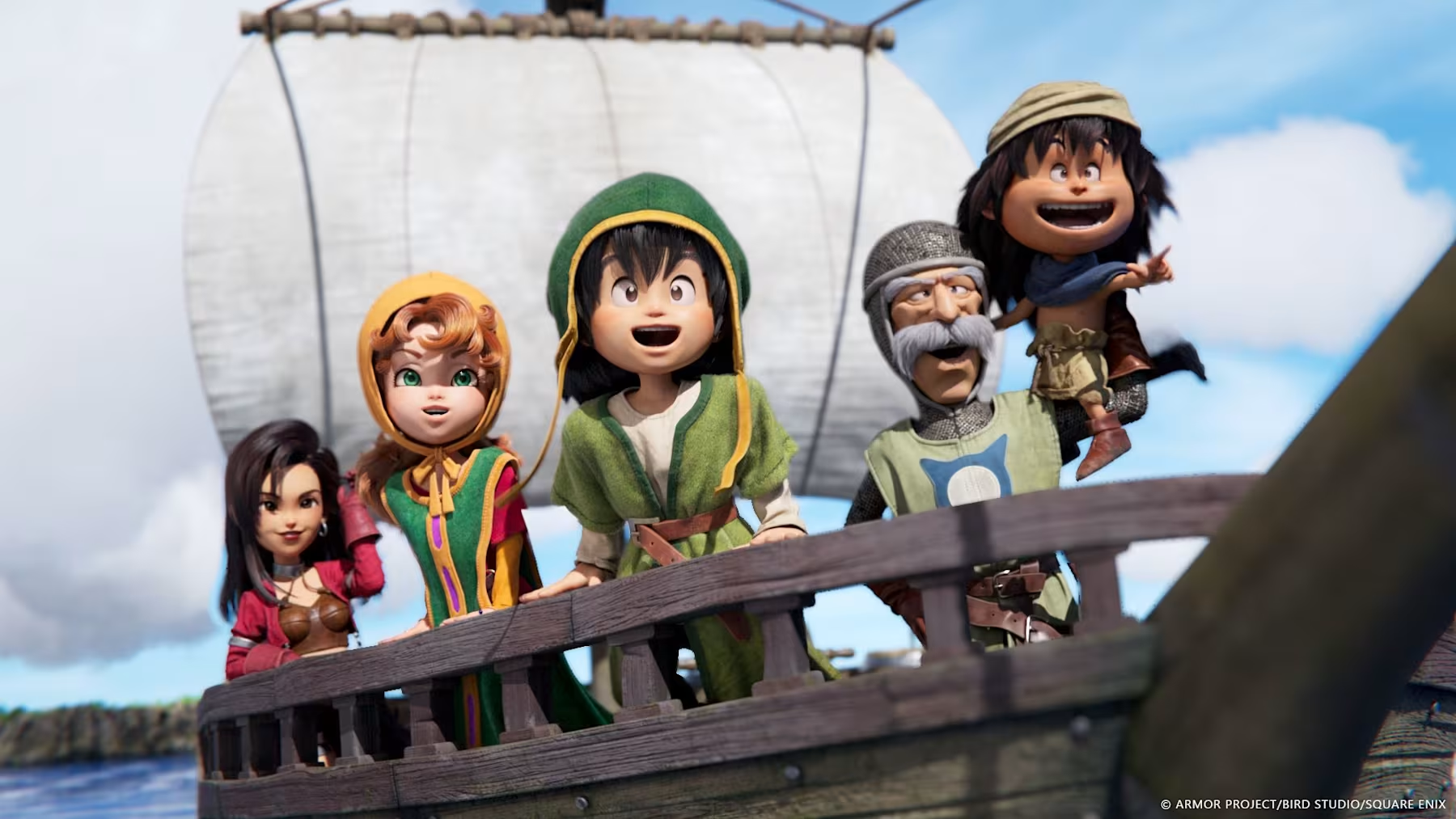
Where the game does get experimental in comparison with other Dragon Quest games is in its story. While Dragon Quest 7 Reimagined follows a familiar, episode structure, the delivery system for its narrative is anything but standard. At the start of our adventure, our hero and his friends dream of exploring the world. The problem? No world really exists beyond their tiny island nation. North, south, east, and west, the whole world is covered in endless ocean. Even so, the protagonists dream of discovering something, somewhere, to quite literally expand their horizons. Their ambitions lead them to discover an ancient shrine, where pieces of a stone tablet unlock a portal to a land not spoken of in any of their histories. Trouble brews for island’s residents, and it’s up to our heroes to save them from destruction. Upon completing this quest, the party returns to the portal and finds that very same island now appearing off the shores of their home. Discovering the mysteries of how and why they were able to resurrect a land forgotten to time encompasses much of the central narrative.
As the game progresses, you will discover more broken tablet pieces and visit numerous other islands, all with their own dangers, characters, and conflicts. By visiting these islands both through the portals and then returning to them once they appear again near your home, you can continually locate tablet pieces and use them to turn the world map into an ever-expanding archipelago.
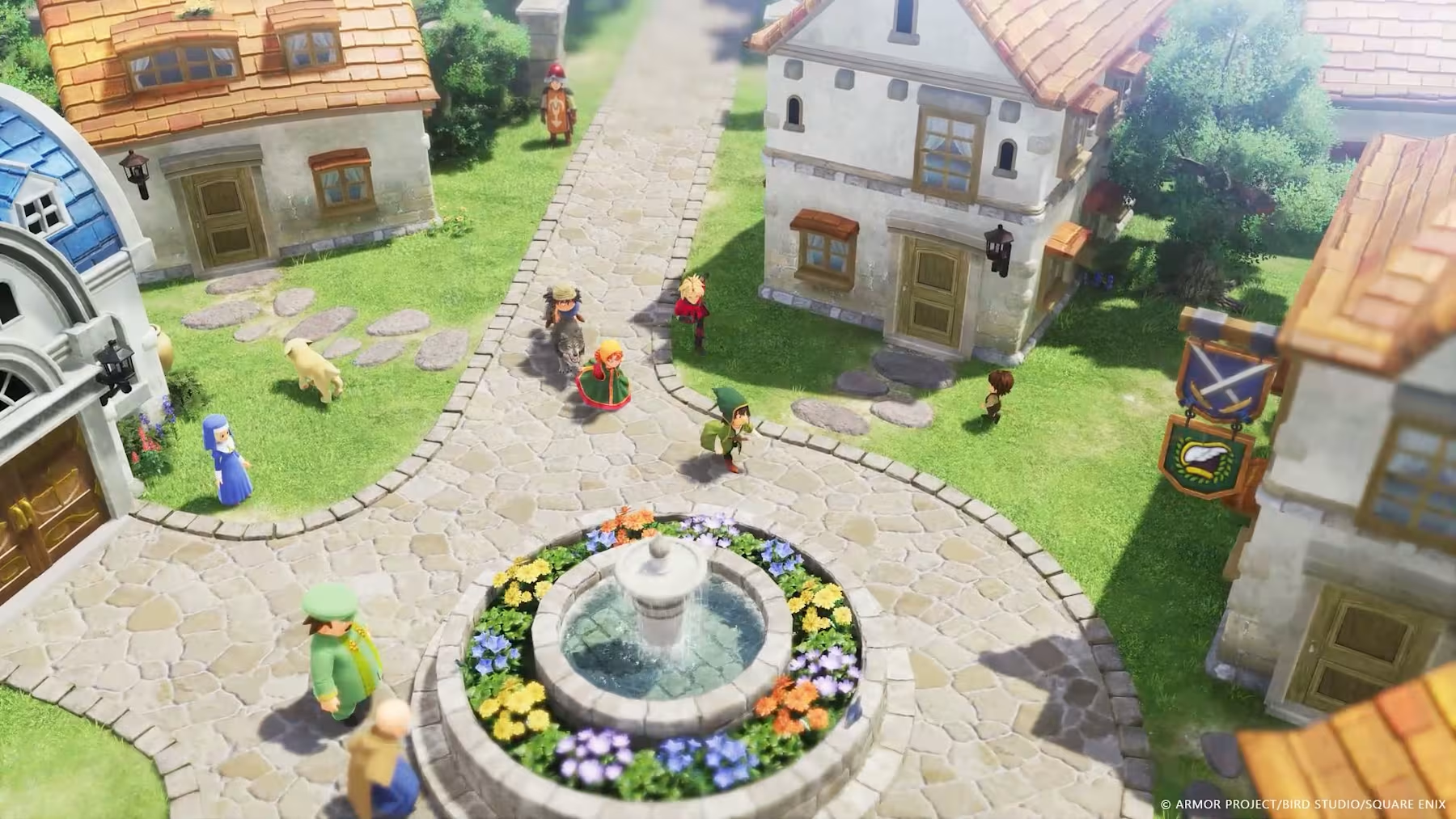
This exploration mechanic functions as somewhat of a double-edged sword. While finding the tablet pieces introduces some nonlinearity to the game and encourages exploration, it also means that you are often scouring each island twice over, looking for clues. You’ll do so first on your initial adventure, and then again when revisiting it once it appears on the world map. The item pools for each iteration of the islands are not the same, so get ready to backtrack again, and again, and again. Compounding the problem is that every island also has several locked treasure chests that can only be opened later in the game, necessitating a third trip back to each item if you want whatever those chests have in store.
Ultimately, this gameplay cadence can get to be a tiring experience. The title feels padded for length, which for an RPG of such considerable bulk already, feels unnecessary. At the same time, the episodic stories on each island vary in quality. Some strike emotional chords you didn’t even know you had (I’m looking at you robot island), while others largely fall flat.
The main cast of the game don’t do much to enrich each island’s story either. Pretty much every character you recruit suffers from “protagonist syndrome.” They have some superficial traits that make them stand out, but the party itself is largely devoid of conflict or real emotional depth. Even when a certain character leaves your party for good, you don’t particularly feel the loss. Surprisingly, this is one area that other Dragon Quest remakes have excelled in rectifying, particularly Dragon Quest 1 HD-2D, so it’s surprising more wasn’t done to make the emotional beats hit harder for the main party.
Finally, we come to the game’s other central gameplay feature – the class system. Unlocked around a third of the way through the adventure, this element acted as a breath of fresh air into what was becoming a somewhat rote adventure. While your main characters at the time each have somewhat established niches as warrior, caster, or support, the customization allotted by the class system still permits a good amount of skill variety, even if they are wrapped again in very familiar Dragon Quest packaging. A wonderful enhancement compared the PS1 system, the Reimagined class system also allows for multi-classing (here called Moonlighting). By moonlighting in an additional class, you can gain additional stat boosts, spells, and abilities. You also gain job experience for both equipped classes, allowing you to get a build up and running much faster than in the original. If anything negative can be said about the class system, it’s that – just as in the original PS1 title – it comes far later in the narrative than anyone would like. A game reliant on such traditional JRPG tropes could really use an infusion of customization and creative character progression much earlier.
If it hasn’t become clear enough throughout this review, my feelings are largely mixed on Dragon Quest 7 Reimagined. The game takes great leaps forward over its original incarnation, speeding up what was a notoriously long adventure into something much more manageable. The methods are accomplishing this – an enhanced job system, the ability to autobattle, spell shortcuts, and other quality of life features – are all welcome additions. At the same time, though, the episodic stories can be overwrought, and the central storyline drags considerably due to the core gameplay conceit of tracking down tablets over and over as you visit islands thrice-over. The game isn’t bad. It’s good by many metrics. But a mind-blowing RPG with an immersive, emotional story and fascinating gameplay systems, it is not.

There’s a lot to love about Dragon Quest 7 Reimagined, a game lovingly updated and beautifully (re)imagined. If you are looking for a relatively easy, 40-50 hour adventure, this may be the game for you. However, if you are looking for an RPG that challenges you, whether it be in its systems, combat, or story, then it may be better to move along.
Dragon Quest 7 Reimagined copy provided by the publisher for the purposes of this review.


