
Octopath Traveler 0 review for Nintendo Switch 2
System: Switch 2
Release date: December 4, 2025
Developer: Square Enix, DOKIDOKI GROOVE WORKS
Publisher: Square Enix
The original Octopath Traveler was a milestone game, not only as the first major exclusive JRPG for Nintendo Switch, but also for the genre as a whole. It simultaneously reinvigorated a love in turn-based combat for many lapsed RPG fans, while also creating a visual style that has not only been wildly successful for Square Enix, but for imitators across other major studios and indie publishers. Octopath Traveler spawned not only a sequel title, but other games using the HD-2D style, including – critically for today’s discussion – Octopath Traveler: Champions of the Continent.
Champions of the Continent was a mobile game that remixed the Octopath combat system, alongside its original world of Orsterra, to tell new stories and introduce a whole host of new characters (in typical gatcha fashion). With the international release of Champions of the Continent shut down, Square Enix has seen fit to remix its content into a full Octopath Traveler release, officially christened Octopath Traveler 0 – releasing now on Nintendo Switch 2.
How well the gameplay and storylines from the mobile game translate to consoles is the question of the day. Will Octopath Traveler 0 echo the success of its predecessor on the new console, or will it be seen only as a cash grab and recoup of investment from mobile? Having spent the last several weeks playing the game for dozens of hours, I think I can confidently say we have another hit on our hands.
Octopath Traveler 0 is a behemoth of an RPG, with a series of core questlines that will legitimately push you to the marketed 100+ hour game length. The basic structure is different than the two main Octopath titles, giving you a branching set of three questlines, which come together to larger story in the end. Once that first story is done, the narrative branches again into a series of sequel quests, bringing back characters from the first sequence and facing them off against even bigger challenges. Intermixed with all these are side quests that introduce new party members or provide additional challenges and rewards. Nearly every one of these stories adds to the lore of Orsterra in interesting ways, and I cannot point to a single “weak link” in the bunch.
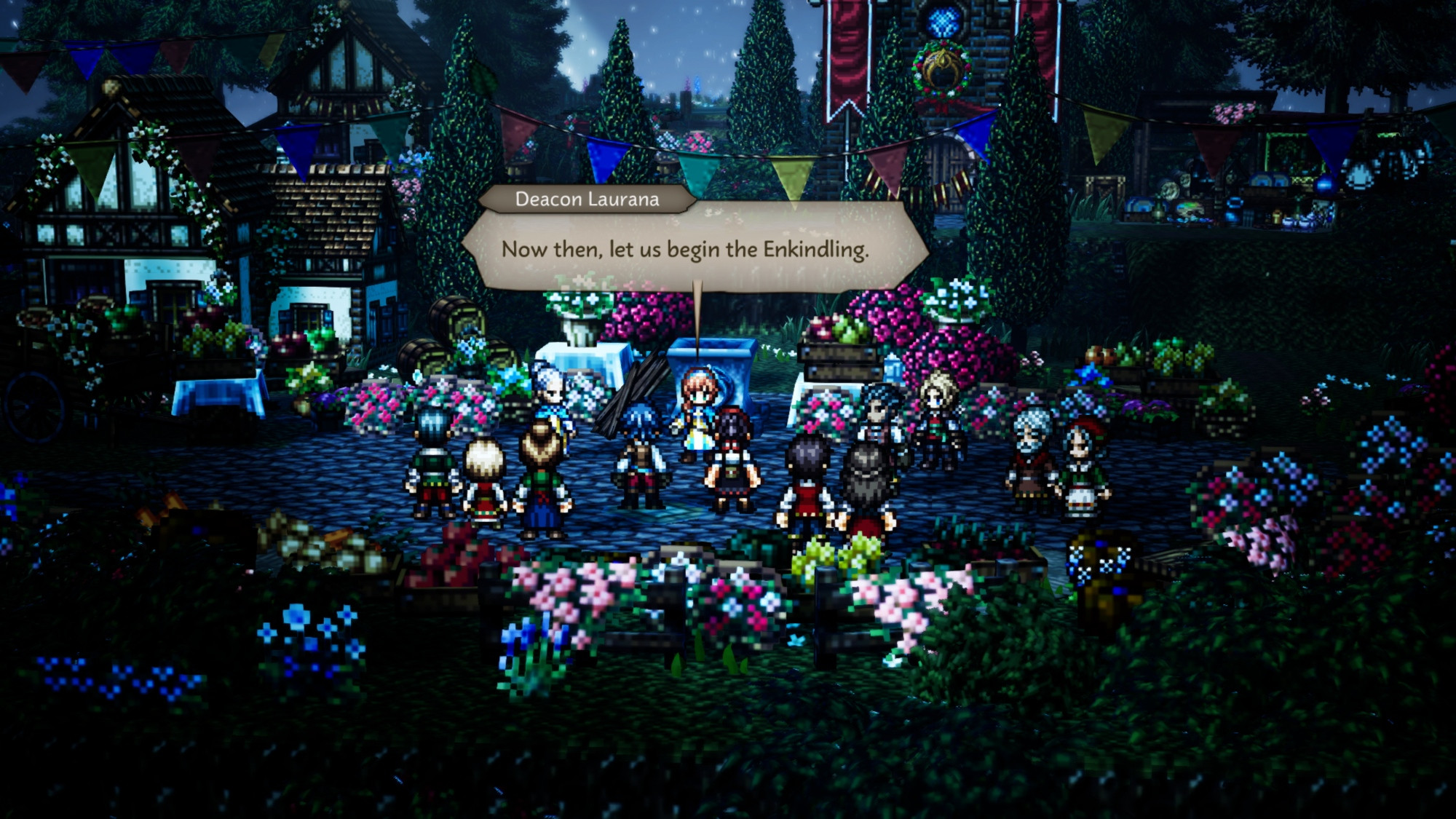
The strength of Octopath Traveler 0’s storytelling is in its characters. While our hero is a traditional silent protagonist, the prologue story set in Wishvale does more than enough to root their motivations and set the stage for their adventure. Each of the main questlines, meanwhile, heavily focuses on a group of fleshed out characters who all have their own external challenges to defeat and internal demons to wrestle with. The narrative never shies away from the brutal reality that sometimes heroes fail, that people give into their baser instincts, and that love does not necessarily always conquer all. The game gets dark, early and often, but in that darkness it manages to find the light that the characters so desperately need to persevere.
Interspersed through earlier chapters of the game is also the side story centered on rebuilding Wishvale – the hometown of our protagonist and setting of the game’s prologue. This questline sees our hero and his friends gathering survivors of the town’s destruction, bringing them together to rebuild their once tranquil home. This story catches us up with several characters introduced in the more slice of lice focused prologue, showing who’s lived, who’s died, and how such a crisis changes people and challenges them to keep moving forward.
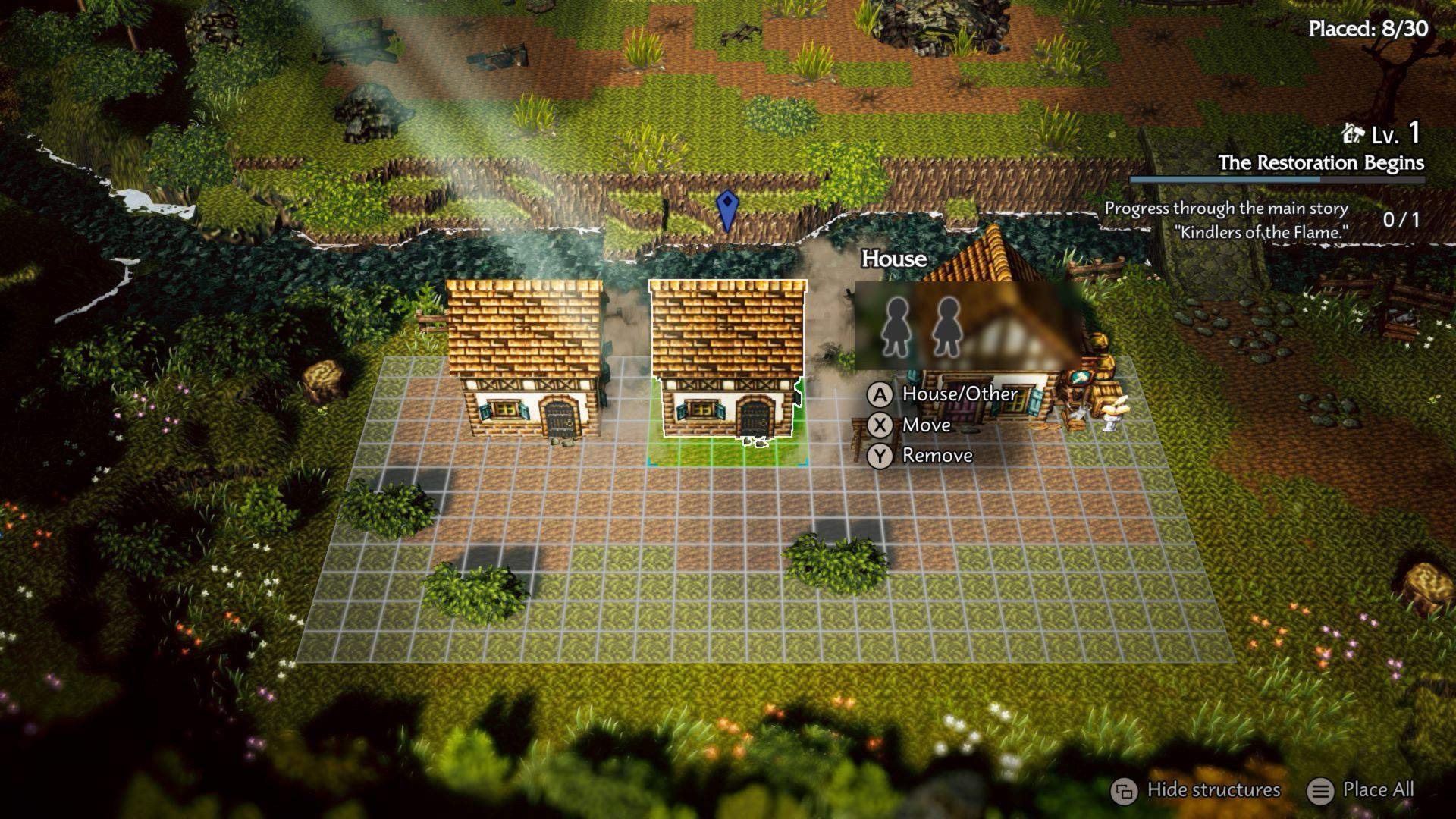
With the Wishvale storyline comes the game’s town-building side game, where you can gather materials and use them to create buildings and decorations for the village. The options start off somewhat limited, but as you complete the questline and level up your town, you will gain access to new buildings, new features, and an expanded landscape. Key buildings include the tavern, where you can cook meals for combat bonuses, a training ground, to keep characters not in your party gaining experience, and a shop, which offers a rotating collection of rare items and abilities to power up your team. Each new building opens up the world in a different way, including new side quests and characters, making rebuilding Wishvale well worth your while.
Of course, none of these elements would be worthwhile if the core experience of Octopath Traveler 0 weren’t so strong. And as is the case in all games in the series, the core experience here is the combat system. On its face, Octopath Traveler 0’s combat is a simple turn-based affair. Choose your actions, target the enemy’s weaknesses, manage your HP and MP, and keep exploring the overworld until the next encounter. All these expected elements are hear and generally well balanced. But its in the additional wrinkles that Octopath games truly shine.
First of all, the boost and break system from other Octopath games is here in full swing. Every enemy comes with a set of shield points, which must be reduced by targeting their specific weapon or spell type weaknesses. Enemies only take half damage while their shields are up, so you’ll need to strategic time when you break their shields to maximize your damage output. That timing will depend on your number of boost points, which each character gains at the start of each turn. Spending boost points increases the damage and effectiveness of your attacks, so your goal should almost always be to time the use of boost points to the moment enemy shields break. This simple tradeoff has always been one of the most satisfying part of Octopath combat, and that’s no less true here.
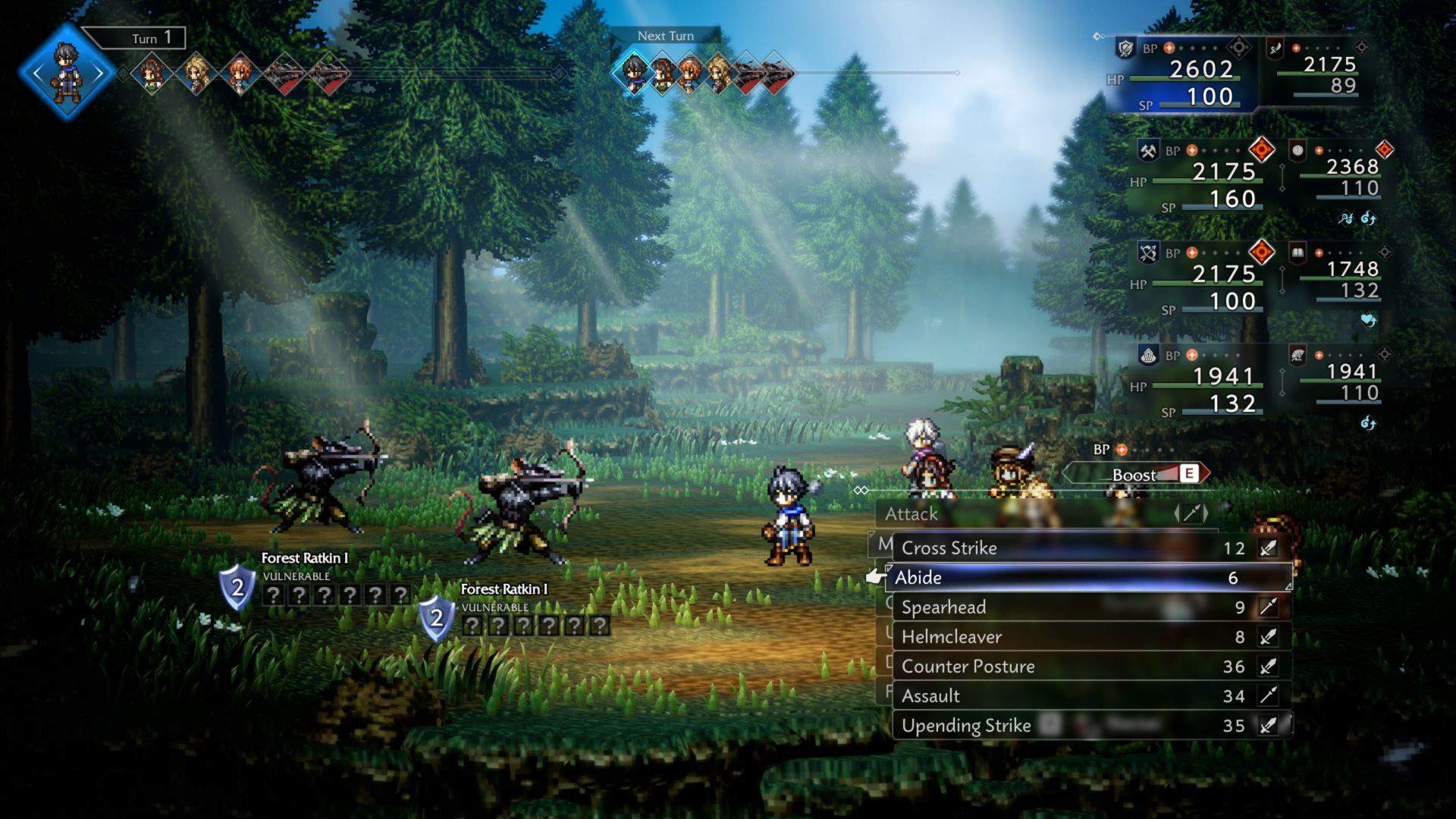
The big difference for Octopath Traveler 0 is a trait it shares from its Champions of the Continent predecessors – eight character parties. Rather than giving each character the ability to equip a subclass, as in the core Octopath games, Octopath Traveler 0 instead allows you to pair characters together, with one taking the front row in a slot and the other the back. These characters share an action each turn, as you can choose to switch them freely from front to back row as the situation demands. Front row character low on health or unable to break the enemy’s shields? Switch them to the back. Back row character packing a critical ability needed for healing and status management? Bring them forward. Each character carries their own boost points as well, adding an extra layer to the game’s resource management mechanics.
The only dark spot I’d put on the combat system is that eventually you will reach a point where random encounters are trivial. Not because you’ve “solved the system” and know exactly what to do, but because your party’s damage output will be so high that you’ll be killing monsters before you break them. Bosses, however, remain a consistent challenge throughout the game, with many unique takes on the combat that I won’t spoil here.
Finally, I should take a moment to talk about the characters making up your party themselves. While the majority of the characters in Octopath Traveler 0 fall neatly into one of the eight predefined jobs established in previous titles, they all have their own unique take on what that class can be. You may have a thief that’s focused on evasion tanking, an apothecary that focuses on poisoning opponents, or a dancer who’s focused on buffing their paired character, rather than debuffing the enemy. Finding just the right combination of party members is about more than just snagging one of each class. It’s about the interplay between the individual abilities themselves.
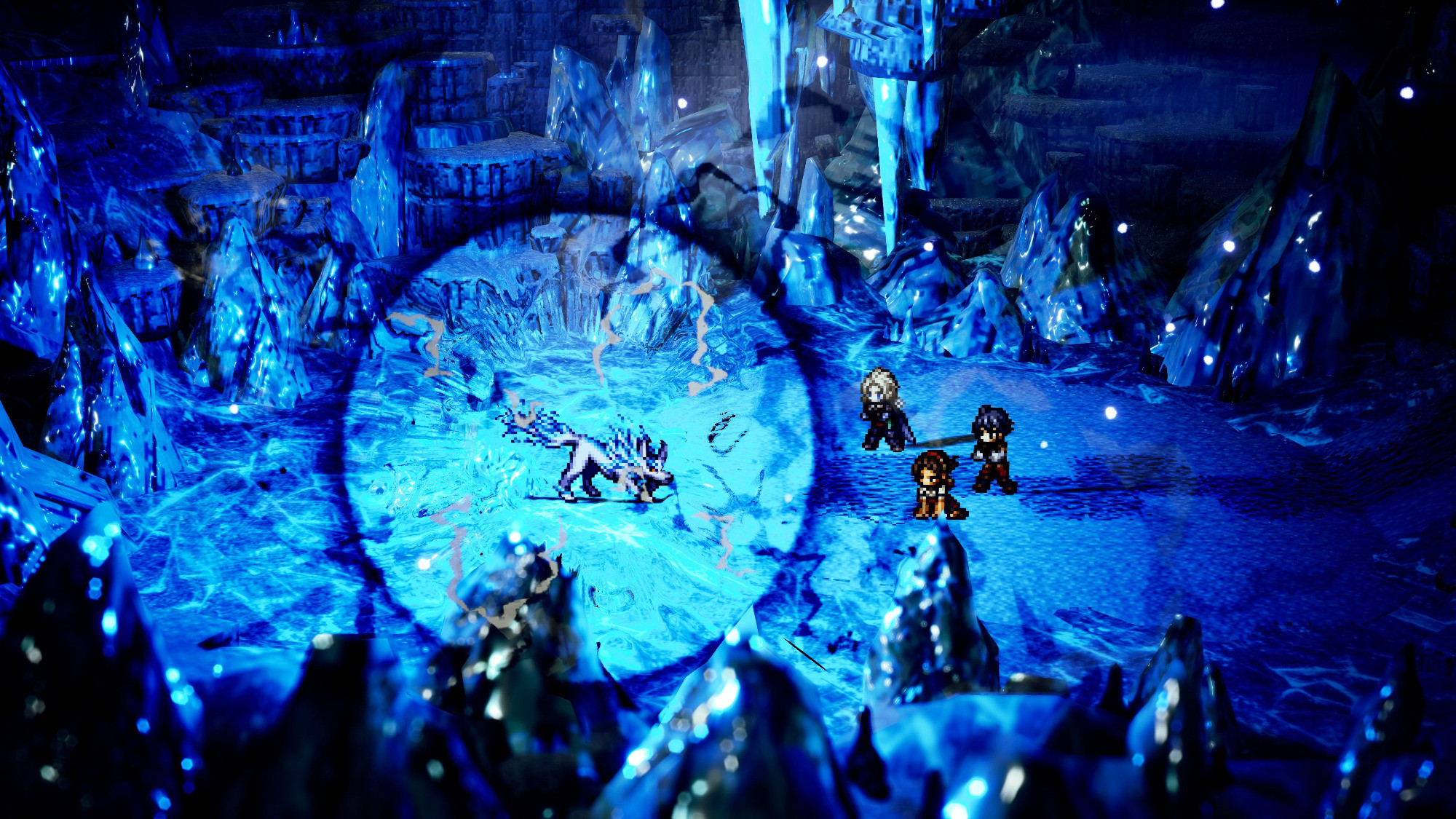
Unlocking the skills that make each character unique is performed by acquiring job points, which you will received after every battle alongside experience and currency. Every character has a series of active skills that you can choose to unlock with these points, as well as passive abilities that unlock on their own as you progress. You can also receive an ultimate ability similar to a limit break in Final Fantasy titles, which vary in strength and effectiveness from character to character. These abilities are probably the least balanced part of the character progression system, as some ultimates are clearly more powerful than others. That being said, every skill has its use, which makes selecting a homogeneous party all the more important.
The characters, core story, side quests and missions, and all the other myriad elements come together to make a massive – and immensely satisfying – package. While the game’s story structure shows a bit of its mobile roots – and actually ends up being more linear than Octopath games past – there’s no denying that nearly every element of Octopath Traveler 0 is lovingly crafted and exceptionally well executed. This is a standout JRPG for the Nintendo Switch 2.

If you have even a passing interest in JRPGs, then Octopath Traveler 0 is a game you should not skip. Even after dumping many dozens of hours into the game, my interest never waned, as each new chapter brought more excellent storytelling, well crafted challenges, and the promise of a potential new character to unlock. Pick this one up, and you won’t be disappointed.
Octopath Traveler 0 copy provided by the publisher for the purposes of this review.


