
Final Fantasy 7 Remake Intergrade review for Nintendo Switch 2
System: Switch 2
Release date: January 22, 2026
Developer: Square Enix
Publisher: Square Enix
There is a particular kind of disbelief that sets in the first time Final Fantasy 7 Remake Intergrade loads on a Nintendo Switch 2 in handheld mode. Not because the game merely runs at this point, that expectation feels sort of outdated – but because it runs with such a fluidity that it quickly stops calling attention to itself. You might simply melt into the experience, and I think that’s exactly what they set out to do.
Final Fantasy 7 Remake, a massively updated version of the PlayStation RPG, follows Cloud Strife, a former SOLDIER turned mercenary, as he becomes entangled with Avalanche, an eco-terrorist group fighting against the Shinra Electric Power Company. Shinra’s exploitation of the planet through Mako energy casts a long shadow over the sprawling city of Midgar, and the game’s opening hours are steeped in tension between the dualities of both survival and resistance, power and consequence. While the story is rooted in familiar themes of environmental collapse and corporate overreach (not that any of us could relate at all in 2026 right?), Remake expands on these ideas with a more intimate, character-driven focus, giving more attention to each character’s growth, including side characters like Jessie Raspberry, who makes a shining example of what Remake does: expands upon original narrative in a way that isn’t afraid of a little extra depth.
The metric ton of emotion is carried largely by the cast. Cloud’s guarded detachment contrasts sharply with the warmth and conviction of characters like Tifa Lockhart and Aerith Gainsborough, while Barret Wallace’s outward loudness masks a deep, complicated sense of responsibility. Intergrade’s Yuffie moments in particular are a shining beacon, too. These characters are given more room to breathe through extended scenes, side conversations, and expressive performances that make Midgar feel lived-in rather than simply traversed. The small moments, side quests and minor cutscenes, help ground the larger narrative, reinforcing why the stakes matter beyond spectacle alone. It’s this attention to character and personal growth that allows Final Fantasy 7 Remake to resonate so strongly.
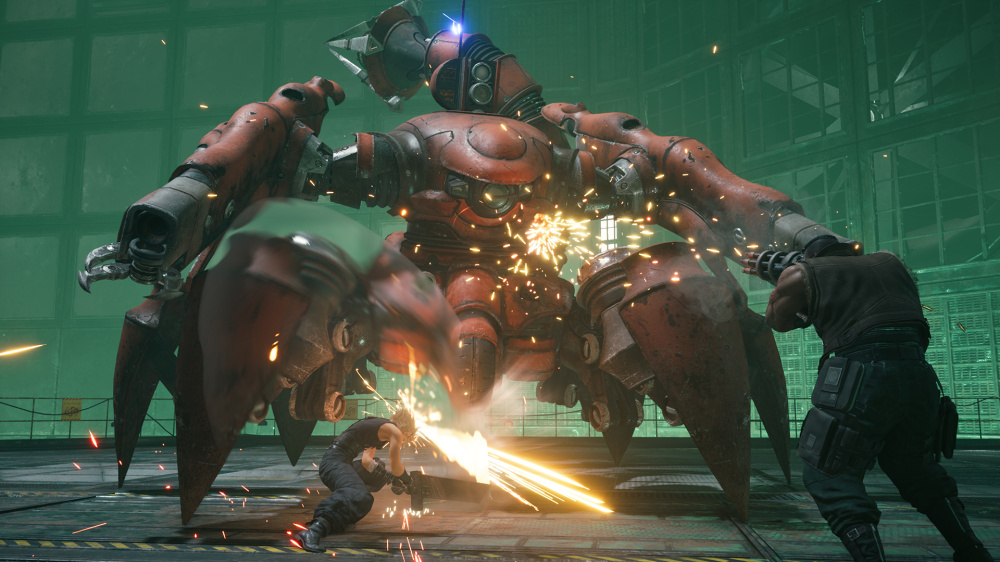
Familiar vistas of Midgar unfold on a portable screen with striking clarity: dense industrial backdrops, expressive and detailed character models, and cinematic lighting that feels largely intact despite the shift in hardware. For a game that debuted as a showcase for high-end home consoles, seeing it presented so comfortably on a handheld Nintendo device is less a technical novelty and more a recalibration of what feels possible. Performance, here, is not just counting frames or scrutinizing pixels, but tethers the experience together – and within minutes, it becomes clear that Final Fantasy 7 Remake on Switch 2 is not just any port, but a loving adaptation that preserves the experience that is intended for the audience.
The sense of ease carries directly into how Final Fantasy 7 Remake Intergrade handles in handheld play. Controls feel snappy and responsive from the outset, whether navigating menus, issuing commands mid-combat, or moving Cloud through Midgar’s dusty industrial environments. There’s a reassuring immediacy to inputs that helps anchor the experience, especially in a game where combat constantly shifts between real-time action and tactical decision-making. Button presses register cleanly, character movement feels precise, and nothing about the handheld setup introduces hesitation or friction. If there is any input latency present, it never rises to a level that calls attention to itself, which I find is an important distinction for a game this dependent on both timing and flow.
Menu navigation, in particular, feels right at home on the Nintendo Switch 2. Swapping Materia, managing equipment, or issuing combat commands is fast and intuitive, benefiting from a control layout that feels well-considered rather than awkwardly adapted. Transitions between gameplay and menus are brisk, maintaining momentum instead of interrupting it. This is especially noticeable during combat encounters, where frequent access to abilities and items is essential; the game never feels like it’s fighting against the hardware or the player’s hands. In handheld mode, this responsiveness goes a long way toward reinforcing the illusion that this experience was meant to live here.
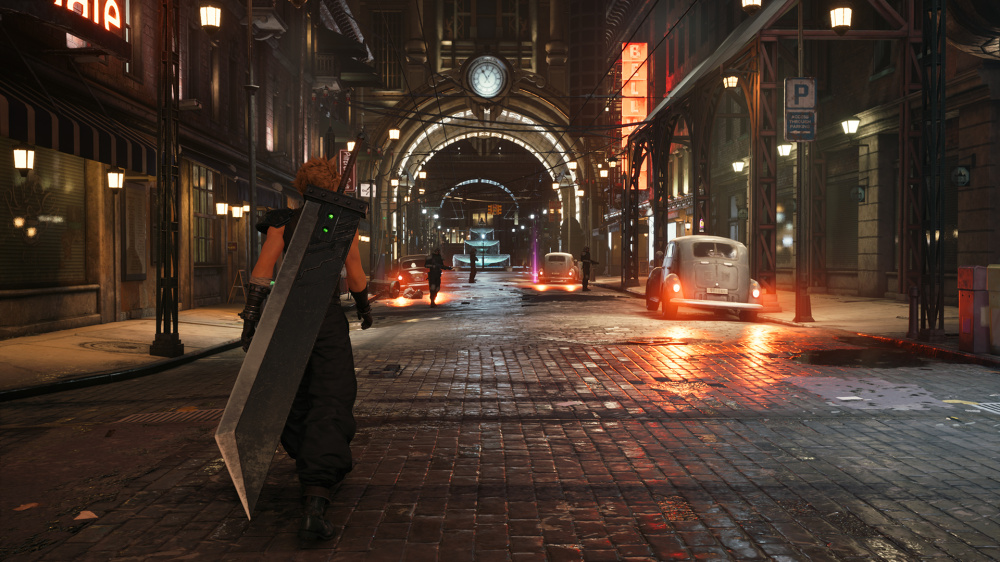
Performance-wise, handheld play proves to be a quiet strength rather than a compromise. The game maintains a consistent feel during exploration and combat alike, with no persistent stutter or instability pulling focus away from the world on screen. Busy battles filled with particle effects, spell animations, and multiple enemies remain readable and controlled, preserving both visual clarity and mechanical responsiveness. Importantly, performance rarely becomes a topic of conscious thought during play, and that, perhaps, is the highest compliment that a port like this can receive. The technology fades into the background, leaving space for the player to simply exist within Midgar once again.
Switching from handheld play to docked mode on a 4K HDTV feels less like a technical comparison exercise and more like a moment of genuine delight. There is something almost whimsical about seeing Final Fantasy 7 Remake Intergrade scale up so comfortably on a large screen, retaining its cinematic flair while running on a Nintendo console. The transition doesn’t radically transform the experience, but it does reaffirm that this is still Midgar, still dense, still dramatic, and still visually striking.
What stands out most in docked play is easily the lighting. Sunbeams cutting through the city’s aging structures, soft ambient glow in interior spaces, and the careful interplay of light and shadow across character models all shine in a way that feels remarkably familiar. These lighting effects were a hallmark of the game when it originally launched on PlayStation 4 in 2020, and seeing them reproduced with such confidence here immediately calls that experience to mind. In motion, the presentation rivals my memories of that original PS4 release, not in raw sharpness or sheer output, but in overall cohesion and atmosphere.
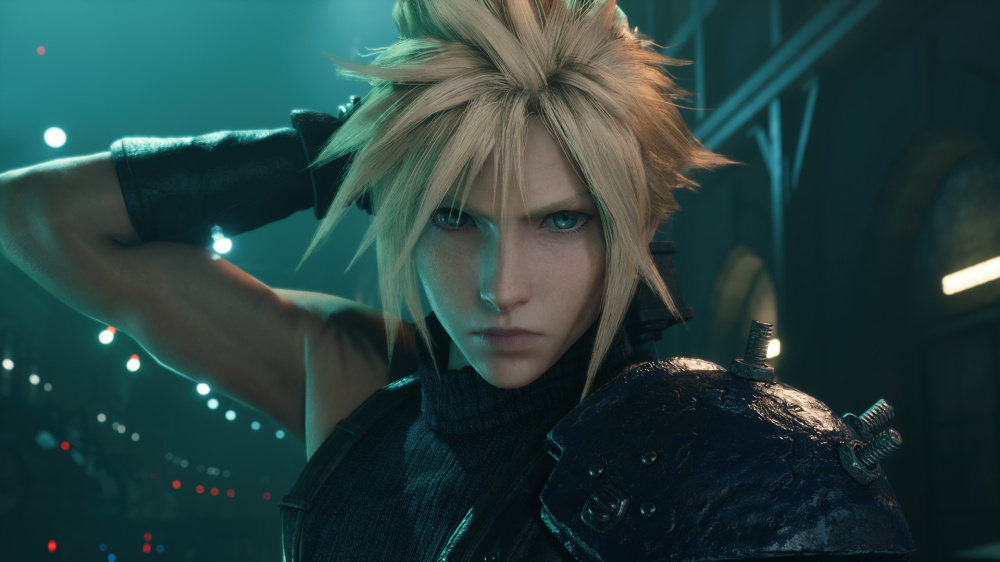
Environmental details hold together well on a larger display, and while a 4K screen can be less forgiving than Nintendo Switch 2’s handheld panel, the image remains pleasing and stable rather than brittle or distracting. The game does not feel exposed by the increased screen real estate; instead, it feels as if its validated by it. Character animations remain expressive, environments retain their layered depth, and cinematic moments still land with the intended weight. Importantly, performance continues to support the experience rather than undermine it: combat remains responsive, travel remains smooth, and visual flourishes like lighting effects enhance immersion rather than overwhelming the hardware.
Docked mode absolutely did not replace handheld play as my “preferred” way to experience Final Fantasy 7 Remake Intergrade on Switch 2, but it complements it beautifully. Where handheld mode impresses through intimacy and portability, docked play reassures through familiarity. Together, they form a version of the game that feels less like a novelty port and more like a confident reintroduction, and one that honors its 2020 debut while benefiting from the flexibility of modern hybrid hardware. Admittedly, most of my time playing was spent in handheld mode, hunched over a small table in the dark of night while I worked my overnight shift in a residential facility. Being able to get small bursts of gameplay in while also working and living life felt almost magical in a way.
At this point in Final Fantasy 7 Remake Intergrade’s lifespan, direct platform comparisons are both inevitable and largely unhelpful. The game has existed on PlayStation 4, PlayStation 5, and PC for years, each iteration offering its own balance of fidelity, performance, and flexibility. The Nintendo Switch 2 version does not attempt to outclass those releases, nor does it need to. Instead, it invites a different kind of comparison, which is one rooted in how the game feels to play rather than how it measures up on a technical checklist.
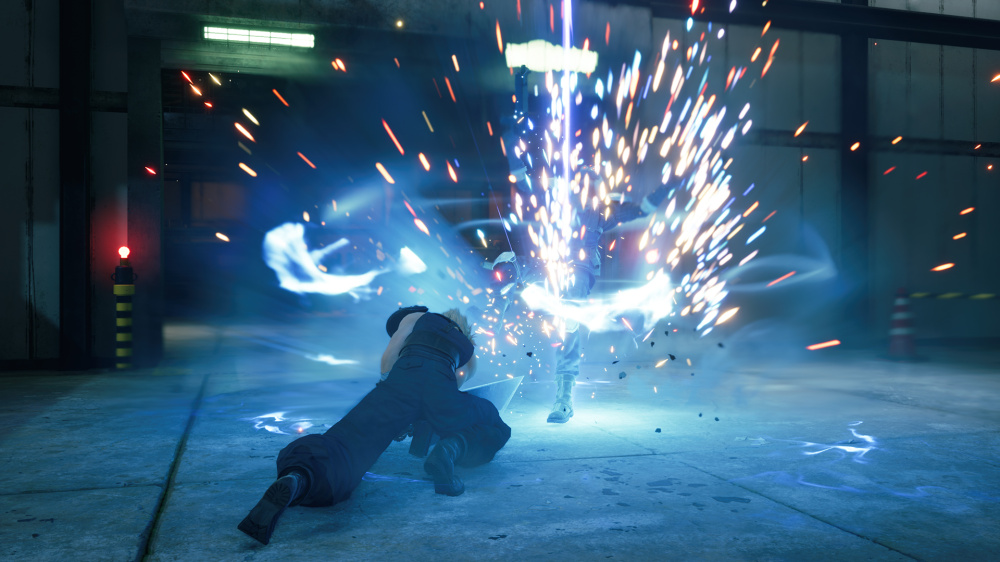
What makes this version compelling is not that it rivals the PlayStation 5 release, but that it comfortably evokes the experience of the original PlayStation 4 launch in 2020 while existing in a far more flexible form. The overall sense of responsiveness, visual cohesion, and atmospheric lighting recalls that first console debut in meaningful ways. For players who remember Final Fantasy 7 Remake as a cinematic, emotionally driven experience rather than a performance benchmark, that familiarity carries real weight.
Importantly, the Nintendo Switch 2 version also sidesteps some of the friction that can come with performance-focused comparisons. There is no need to toggle modes, chase frame-rate targets, or sacrifice one aspect of presentation for another. Instead, the game presents a consistent, well-balanced experience across both handheld and docked play. In doing so, it reframes expectations: this is not a “lesser” version defined by what it lacks, but a tailored one defined by how seamlessly it integrates into a hybrid lifestyle.
For players who prioritize portability, flexibility, or simply the novelty of revisiting Midgar in short sessions without sacrificing atmosphere, the Nintendo Switch 2 version offers something genuinely distinct. It doesn’t replace higher-end versions of the game – but it doesn’t feel overshadowed by them either. That balance is difficult to achieve, and it speaks to a port that understands its audience rather than chasing parity for its own sake.
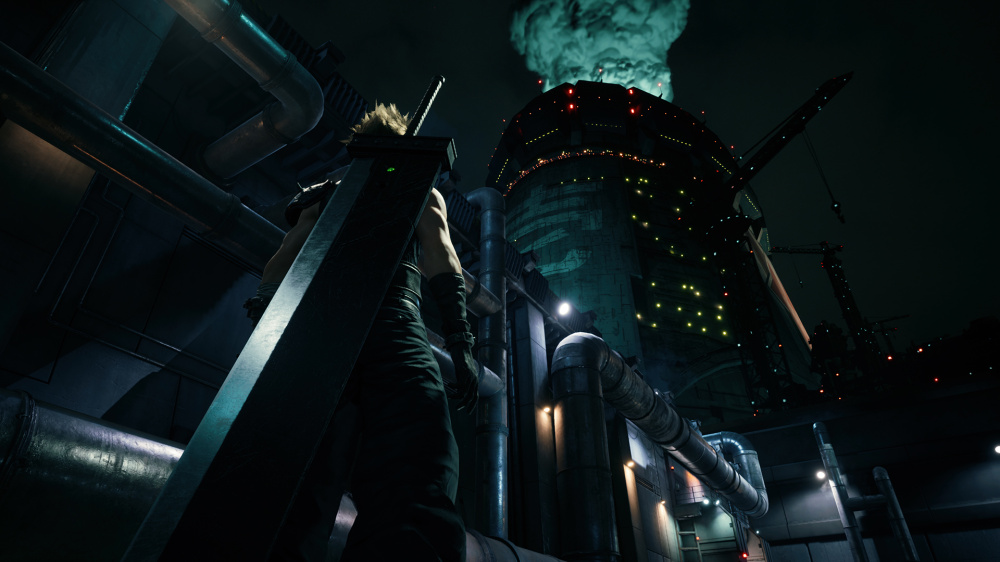
Perhaps the most telling measure of Final Fantasy 7 Remake Intergrade on Nintendo Switch 2 is how quickly performance fades from conscious thought. Once the initial curiosity settles, once the novelty of seeing Midgar on a portable Nintendo console gives way to familiarity, it is then that the game simply becomes itself again. The real-time combat flows, menus respond instantly, environments hold together, and cinematic moments land without technical distractions pulling attention away from the story being told.
This is where the port ultimately succeeds. Performance here is not some sort of effort hell-bent on perfection, nor is it one determined on pushing hardware to its absolute limits. It is more a sense of permission: permission for the player to stop evaluating, stop scrutinizing, and stop wondering whether the experience will hold. The game earns that trust early and maintains it consistently, allowing its characters, themes, and world to take center stage once more. What you get in Remake on Switch 2 is a full experience.
In gaming, we often end up in a landscape where technical analysis often dominates conversation, yet, there is something refreshing about a release that doesn’t demand to be dissected. Final Fantasy 7 Remake Intergrade on Nintendo Switch 2 works not because it challenges expectations at every turn, but because it meets them with confidence and care. It respects the original vision of the game while adapting it thoughtfully to a new context, and it is one defined by portability, versatility, and ease of access.
That, in the end, may be the most meaningful achievement of this version. It proves that performance does not need to be exceptional to be effective; it simply needs to be reliable enough to disappear. When that happens, Midgar feels just as immersive, just as dramatic, and just as alive as it did in 2020 – only now, it fits in your hands.

I’ve realized how thoroughly Final Fantasy 7 Remake Intergrade on Nintendo Switch 2 has won me over – not through spectacle alone, but through comfort, consistency, and it’s beautiful, yet quiet confidence. This is a version of the game that fit itself naturally into my days, inviting me back to Midgar in brief, stolen moments hunched over that small table at work, just as often as during longer sessions at home. If this is the standard Square Enix sets moving forward, I can’t help but feel excited at the thought of revisiting this world again when Rebirth inevitably arrives on Nintendo Switch 2 – not as a compromise, not as a curiosity, but as an experience I already know I’ll want to return to, wherever I happen to be.
Final Fantasy 7 Remake Intergrade copy provided by the publisher for the purposes of this review.


