
Lovish review for Nintendo Switch

System: Switch
Release date: February 5, 2026
Developer: Labs Works
Publisher: Dangen Entertainment
If one were to take a classic NES-era dungeon crawler and injected it with the most unhealthy dose of romantic insecurity on the planet, what might occur is Lovish. Now shake it violently like a snow globe until random events fall out and what you end up with is one of the most hilariously absurd romps to grace Nintendo Switch in quite some time.
You play as Sir Solomon, a knight on a mission to rescue Princess Tsuna from the Devil Lord. But this isn’t just a heroic quest, it’s also a deeply insecure one. Solomon is terrified that once she’s free, she’ll fall in love with one of his friends instead of him. So naturally, he ditches his party and storms the castle alone. Love makes fools of us all, I suppose.
The game is structured into over 50 compact rooms, each functioning like a miniature puzzle-box battle arena. Every room has clear objectives: defeat enemies, collect items, survive hazards. The levels are short enough to feel satisfying without giving the player a sense of dread. It’s fast, clean, and focused. You’re never wandering aimlessly. Each level is a tight little challenge that rewards quick thinking and efficient movement. The pacing makes it dangerously “just one more room” addictive, which is helpful in that you’ll also want to uncover the secret crown item in each room, which necessitates jumping around like a mad fool and slashing everything. The crowns can hide basically anywhere, so collecting them may end up with you redoing a level a sarcastically large amount of times before figuring out their whereabouts.
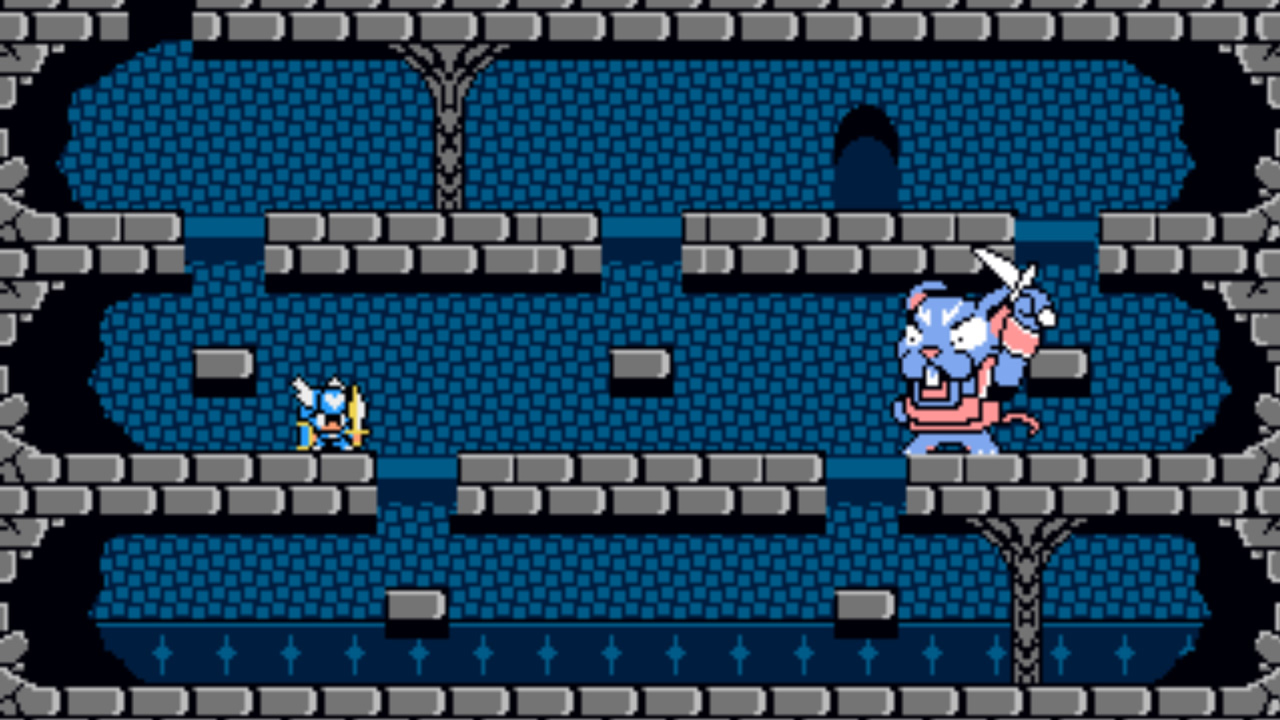
The item system adds variety, letting you upgrade Solomon’s abilities or unlock things that meaningfully (and sometimes meaninglessly) alter the experience. You unlock the shop early on, and the coins you collect in each level and through the random events after some levels will accrue slowly, but each time you can make a new purchase you’re rewarded with a new ability, or something silly, depending on your choices. It feels playful rather than overly serious – this is a game that is entirely cognizant of the fact that it’s being a little ridiculous and leans into it.
Controls are simple and responsive in that classic 8-bit style. Movement feels tight, attacks are immediate, and you rarely feel like you’re fighting the game instead of the enemies. That responsiveness matters in small rooms where precision is everything. I did have trouble at first with how floaty jumping felt, but in small areas where landing on a tiny block is the only option aside from landing in a spike pit, you learn to adjust.
What elevates Lovish from a simple “solid retro action game” to something memorable is its premise. Solomon isn’t just a brave knight, he’s a jealous one. The emotional core is absolutely absurd but oddly relatable: insecurity dresses up as heroism, sometimes. It gives the game personality. This isn’t just a game where you set out slaying monsters. It’s a story of ego, love, and self-sabotage wrapped in pixel art.
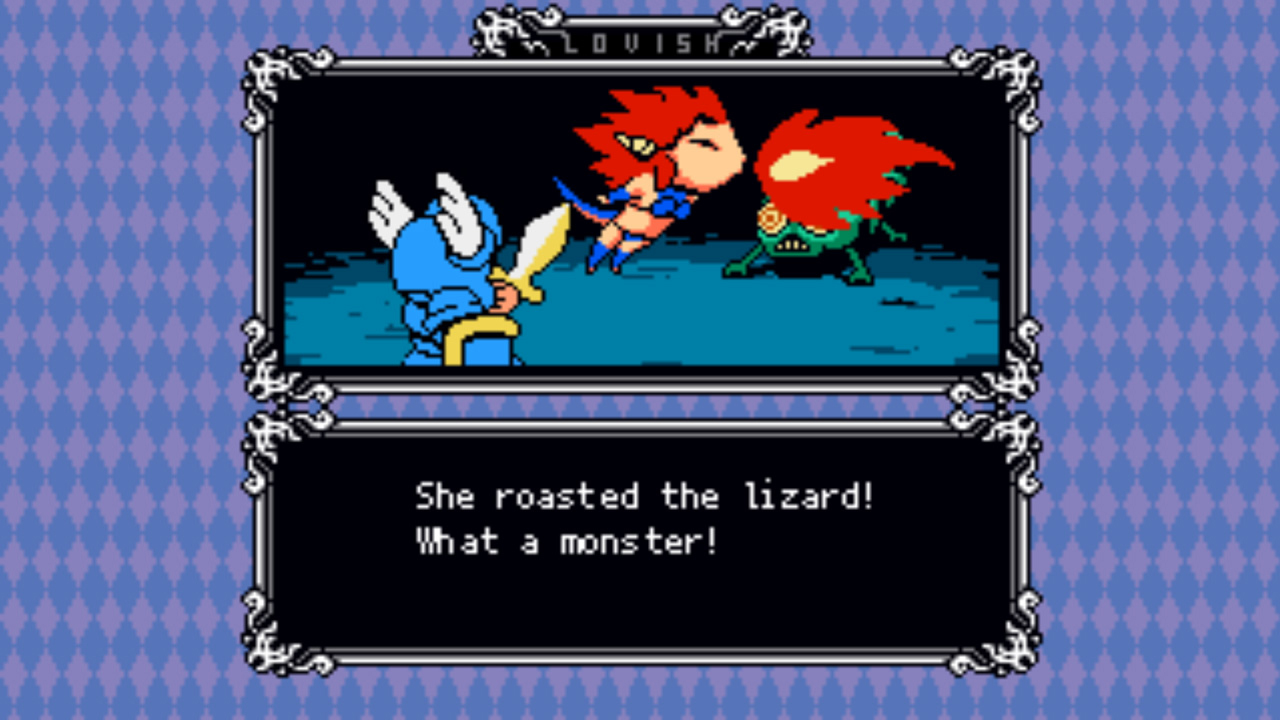
And then there are the events. You see, after each tiny level, you’re treated to a short randomized event scene – and this is where Lovish truly shines. Anything can happen. Anything. You might find an item or unlock a new room, trigger a random RPG battle, meet one of the (over 100) bizarre characters, watch something completely nonsensical unfold, or possibly witness the destruction of the world. Who knows! These scenes are chaotic, unpredictable, and some are genuinely funny. They add a layer of silliness that keeps the experience fresh. Even if the core gameplay loop is familiar, the event system makes every run feel slightly unhinged in one the best ways. It’s like the game pauses between levels just to say, “But what if we made this weird?”
The pixel art is charming, expressive, and clearly crafted with care. The soundtrack (20+ tracks by Matt Kap, who also worked on the developer’s previous title Astalon: Tears of the Earth) brings real energy to the adventure, reinforcing that nostalgic action vibe while keeping momentum high. What Lovish feels like is a love letter to 8-bit action games, but if it were written by someone who wants to roll a D100 every forty seconds for the purpose of chaos.

Lovish is an experience. It’s a game that succeeds because it knows exactly what it is: a compact, replayable, absurd action-adventure with a hilariously insecure hero. The tight room design, responsive controls, and wildly unpredictable event scenes make it consistently entertaining. It’s cute. It’s ridiculous. It’s surprisingly addictive. And honestly? I’m not sure whether I want Solomon to rescue the princess or go to therapy. I’m leaning towards therapy.
Lovish copy provided by the publisher for the purpose of this review.


