
Metroid Prime 4: Beyond review for Nintendo Switch 2
System: Switch 2 (reviewed), Switch
Release date: December 4, 2025
Developer: Retro Studios
Publisher Nintendo
That I can say that I’ve played and completed Metroid Prime 4: Beyond feels like a small miracle in of itself. As a longtime fan of the series who has spent the past eighteen years waiting hungrily for a proper sequel to to the captivating, genre-bending Metroid Prime trilogy, part of me is simply happy this game exists as a real thing I can play. Those original titles helped define my taste in games over the years that followed, and set a high bar as a stellar example of how to balance a rewarding sense of exploration with smart environmental storytelling and engaging first-person combat. While I didn’t necessarily need Metroid Prime 4 to reinvent the wheel, I was certainly open to it experimenting with some new ideas to push the franchise forward – hopefully, while managing to recapture everything that made the original games so special.
For those who aren’t familiar with the Metroid Prime games, these are first-person adventure games that balance blaster-based combat with environmental puzzle-solving and, typically, an interconnected map design that requires thoughtful traversal. The alien worlds that bounty hunter Samus Aran finds herself on often feel vast, despite the actual explorable space usually being more of a tightly crafted maze than an open world. Typically, much of the story of those original games was told more through background lore than constant cutscenes, although there are some exceptions. Combine this with punchy, often challenging combat and a beautifully decrepit atmosphere, and there’s a reason why those original games are held in such high regard to this day.
Metroid Prime 4: Beyond attempts to introduce some new ideas to the series, which I can appreciate at a conceptual level. While the first two games in the series connected their worlds’ biomes via elevator-based loading screens, which didn’t always make sense (in what world, really, would a planet’s frozen wastes connect with magma pits by a short elevator ride?), there’s now a desert overworld separating them. That overworld is also traversable by a motorcycle of all things, which is to my memory the first time players have ever had full direct control of a vehicle in a Metroid game. The story is told more overtly than ever before, with more fully-voiced cutscenes than any of the previous Prime games (although not as many as the often-criticized Metroid Other M). Samus also has some new Psychic abilities this time around, which the game introduces gradually, primarily for occasional environmental puzzles.
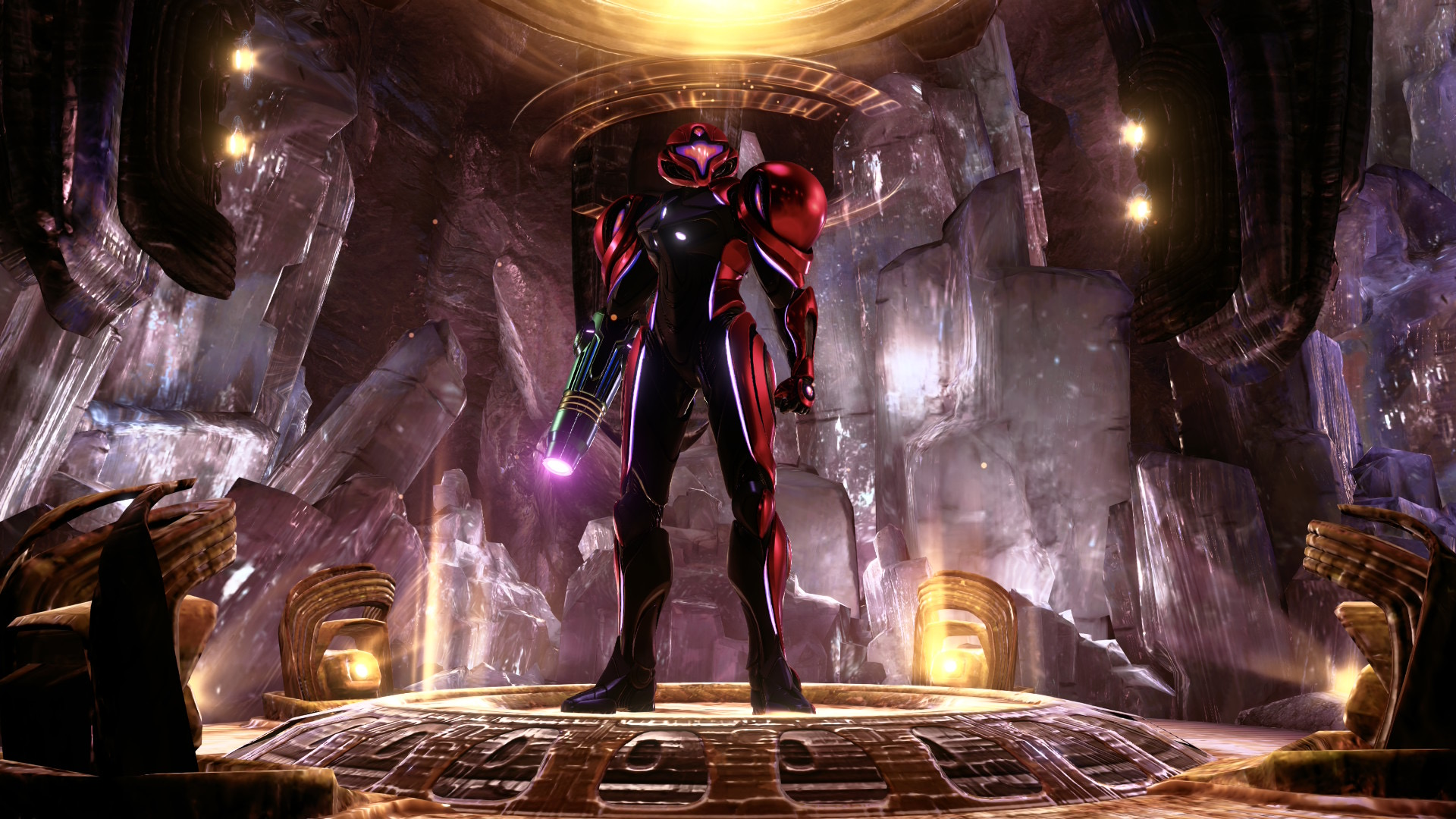
On paper, I’m not inherently opposed to any of this. I don’t believe that Metroid Prime shouldn’t experiment or try to evolve, as that’s an unfair standard to hold any ongoing series to. Unfortunately, many of Metroid Prime 4’s new ideas are not executed very well, and they often impact the core experience in a way puts a damper on the game as a whole. That’s not to say that there weren’t moments where I wasn’t immersed or surprised, or that had me on the edge of my seat – those moments are plentiful. But as a whole, I wish Prime 4 was just a little more thoughtfully designed.
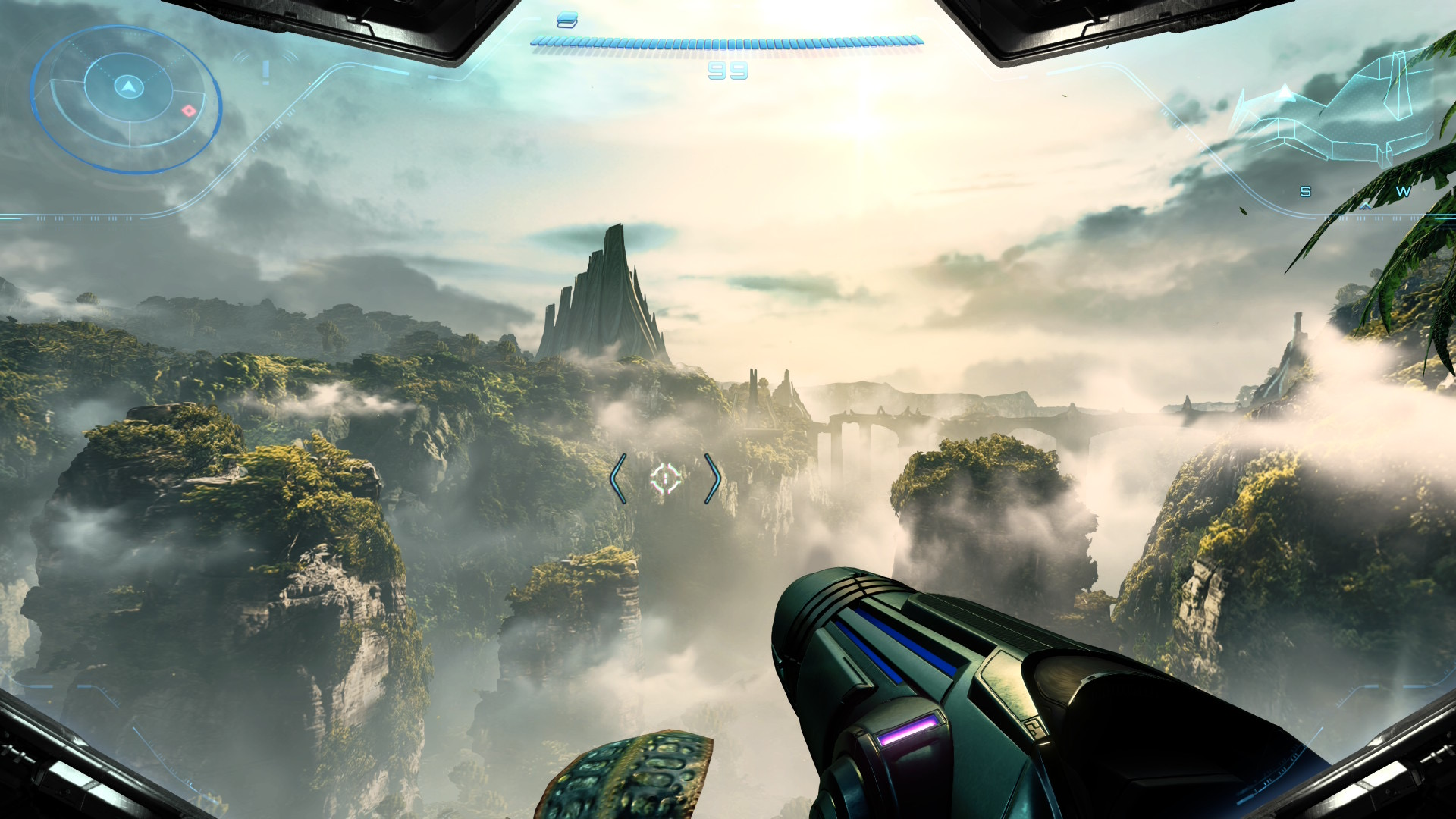
One aspect about Metroid Prime 4: Beyond that never disappointed me was how this game looks. I didn’t review the Nintendo Switch 1 version, but the Switch 2 Edition is visually stunning from start to finish. Because this game can run at 4K resolution and a consistent 60 frames per second, it is the sharpest, smoothest Metroid game ever, and one of the most technically impressive games Nintendo has ever released. If you have a supported display, or want to reap the full benefits of your system’s built-in screen, you can even dial up the speed to 120 frames per second at the cost of resolution, an experience that is mind-bogglingly responsive. But beyond the numbers, Metroid Prime 4 excels at creating a world that is rich with detail and often stuns in its art direction.
The game’s planet of Viewros is split into several biomes, and while these regions retread common themes – a snowy area, an underground mine area, a lush jungle area – each portion of the map has been crafted to feel more organic than ever. The game’s first true opening area, Fury Green, is dense with foliage and has some of the most beautiful, sweeping vistas we’ve ever seen in a Metroid game. Flare Pool puts a twist on the typical fire/lava themed-biome by placing it in an active volcano, and the inevitable boss fight in the center of it is unlike anything else in the game. And that ice region isn’t just a bunch of snow – it’s a laboratory built into the mountainside, with a portion of it only accessible by crossing a massive traverse.
The attention to detail is stunning, too. In Ice Belt, one of the objectives is to turn on the massive generator that powers the facility. After you do so, the frozen science labs start to thaw around you, once-defunct machinery whirs to life across the complex, and water from now-melting icicles drips onto Samus’ visor as she walks by below them. When Samus fires up a charged shot in a dark room, we see her eyes flash in the visor in more detail than ever before. The skyboxes in this game are works of art in of themselves, probably some of the best I’ve seen. There are moments when this game’s Nintendo Switch 1 roots and long development cycle are visible, like the occasional texture that looks a little too pixelated up close, but those moments are few and far between. 99% of the time, it looks impeccably good. Don’t even get me started on Samus’ glorious new suits and all the cool-as-hell moments the game creates that showcase her badass new design.
And the music… my goodness. Metroid Prime games have a reputation for their moody, atmospheric soundtracks, and Prime 4 is no exception. The heavy anthemic choral notes underscore many of this game’s moments of exploration, and it helps the world feel grander than it otherwise would, really amplifying the sensation that Samus is a warrior on a mission. There’s that little bit of classic sci-fi twinge that rears it head from time to time, which contributes to the aura of alien mystery that is so critical to these games. And during the game’s more bombastic moments, when things kick into high gear… the music dials the energy up to 11 accordingly, with dirty guitar riffs abound. The composers of Metroid Prime 4 absolutely understood the power the previous games’ soundtracks held and did a phenomenal job capturing those same qualities, while also taking the soundscape in different directions from time to time.
Combat feels just as excellent as it always has. Samus’ arm cannon is both punchy and nimble, and all the elemental beam weapons she unlocks along the way feel delightfully powerful. There’s still just nothing in gaming that feels quite like charging up a surge of energy and launching it at a nasty alien dude to blow him to smithereens. To that note, while I found this game’s moment-to-moment enemy variety fairly repetitive (although some of them are certainly cool-looking), the bosses Samus fights are some of the best in the series. I don’t want to spoil them as they’re some of the game’s best surprises, but they continue the series trend of playing like fast-paced combat puzzles that test the players’ reflexes and observation skills, and I loved every one of them. The controls are also very responsive no matter how you play. As someone who loved how the Wii versions of the older Metroid Prime games played, I opted for the control scheme that most similarly echoed it, and it worked great. I had to get a little used to recentering the reticle on the fly, but eventually that felt like second nature.
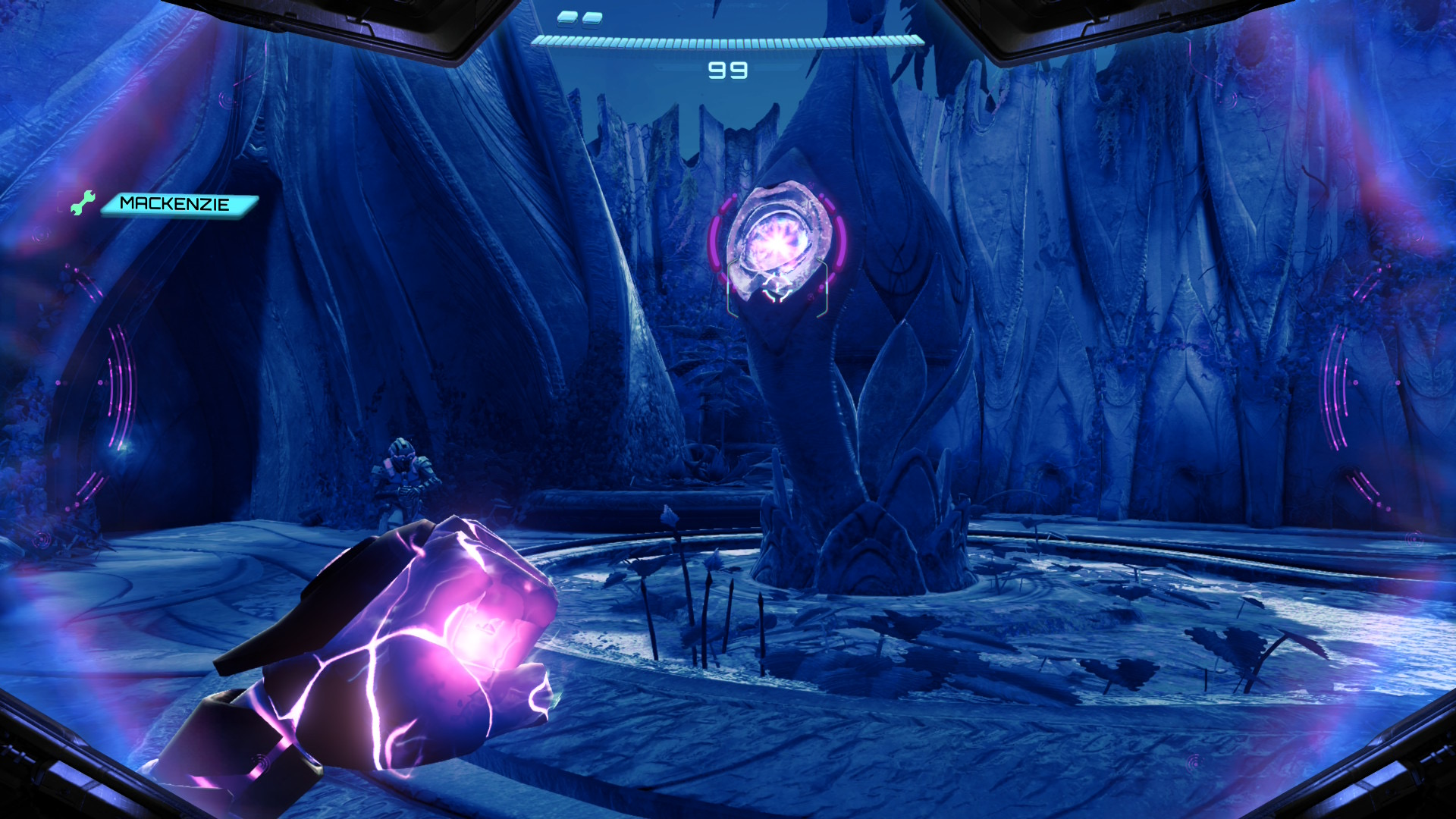
Samus does get some fun new abilities this time around in the way of Psychic abilities, which add new interactions to her toolbox alongside core returning abilities. Early on, Samus unlocks the Control Beam, which lets her manipulate the direction of a fired shot in midair. This can be used to open doors that otherwise would be inaccessible, or stun enemies briefly. Because time slows when a Control Beam shot is fired, it can also be used to hit multiple targets at once (something which some bosses and minibosses require). Samus also eventually unlocks the ability to drop Psychic Bombs in Morph Ball mode. Once she returns to her bipedal form, she can then actually pick up and launch those motes of energy. This is used for puzzles, but also gives Samus what’s essentially the ability to throw energy grenades, which is just awesome. While the other psychic abilities she unlocks throughout the game are more minor and only useful in specific contextual situations, overall I enjoyed the new twists to Samus’ arsenal.
So, it’s clear that much of what makes a Metroid Prime game tick is here in full force. Unfortunately, that’s not the full story because as I mentioned earlier, the game also attempts to shake things up a little, and those results are mixed. In some cases, the additions just fall flat… and in other cases, they actually made the game less enjoyable for me.
First, let me touch on this game’s story (without spoiling anything, of course.) The impetus for Metroid Prime 4: Beyond’s events is that Samus is sent to a planet to assist the Galactic Federation in a battle against the Space Pirates. It’s an awesome, action-packed sequence that’s made more interesting by the appearance of Sylux, a rival bounty hunter who appeared briefly in some of the previous Metroid Prime games and always acted with hostility towards Samus. Well, he shows up again, and tries to steal this artifact thing, but it creates a portal and whisks them all off to the uncharted planet Viewros, where the rest of the game takes place. From that point on, Samus’ main objective in Metroid Prime 4: Beyond is mostly to get off the planet. Once she discovers that some Galactic Federation troops have also been teleported to the planet, it also becomes somewhat of a rescue mission, too.
What’s baffling is that Sylux, and the implied threat that comes alongside his presence in the game, is almost shockingly a non-factor across the entire game. Sylux is basically absent until Prime 4’s final moments, and while those moments are awesome in several respects, it feels like very little gets resolved. By the end of Prime 4, I felt like I had learned very little about the character that Prime 4 wants to set up as its main antagonist, and that was disappointing after waiting such a long time. You get a little more context if you manage to 100% complete the game, but it’s not particularly substantial. I honestly can’t tell if lead developer Retro Studios is attempting to set up for a bigger hypothetical Metroid Prime 5, or if they just couldn’t come up with a satisfying arc for their villain. This is also yet another Metroid Prime game with a subplot about finding out what happened to the long-eradicated sentient aliens that used to live on this planet, a task accomplished primarily by scanning stuff to find lore. Having now done this many times in Metroid games, I was pretty over it this time around, and nothing the story told about Viewros’ previous inhabitants surprised me.
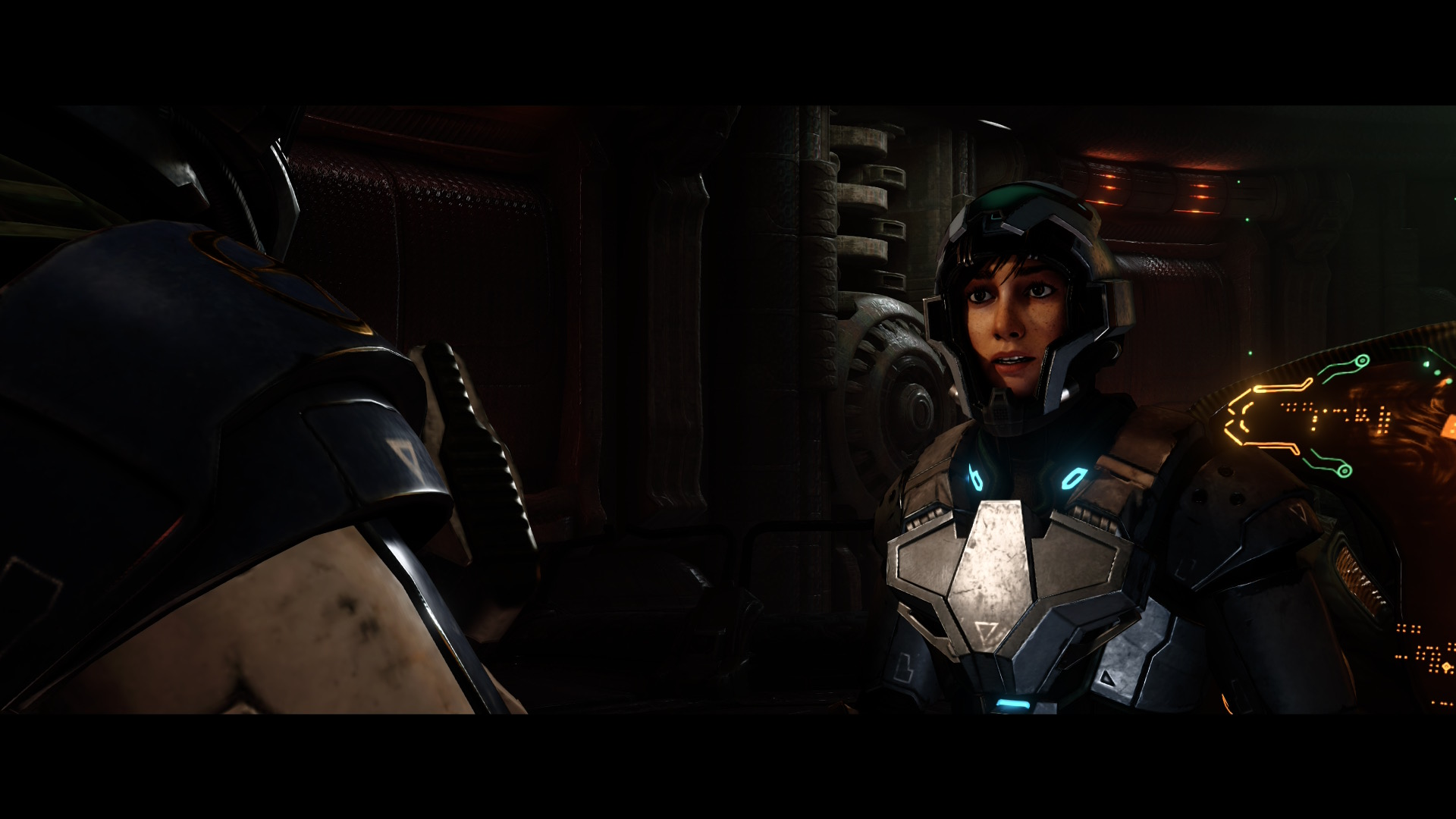
Now, with this game also being a rescue mission, as Samus traverses across Viewros she encounters several members of the Galactic Federation who also found themselves stranded after teleporting there. Following their distress beacons, as well as attempting to gather the keys required to activate the teleporter to get them all off planet, is the main reason Samus finds herself wandering to every corner of the map in the first place. I like this concept, as it helps position Samus not just as a killer of hostile aliens, but indeed as a hero who attempts to look out for others who are in need. And I appreciate that the game manages to show this more empathetic side of her character while also continuing to portray her as an unstoppable force who is clearly not to be messed with. Even though Samus does not speak in this game, we get to understand her duality through her actions, and as a fan of the series it’s all great stuff.
This is why it’s a bummer that the people she interacts with are such lackluster characters. I know there are folks out there who would rather that Samus doesn’t interact with anyone, and I don’t fall in that camp, but I do expect dialogue in any game at least be interesting. Unfortunately, all the troopers Samus interacts with are the most milquetoast, basic archetypes of a merry group of space soldiers that we’ve seen a thousand times before. You’ve got your gruff sergeant, your stoic sniper, your nerdy technician and your plucky new recruit, and they don’t say or do anything that ever remotely surprised me.
I’ll admit, the group grew on me over time. I wouldn’t say I found myself caring about them or connecting with them at anything beyond the most basic level, but as they accompany Samus for some key portions of the game, there’s some level of endearing camaraderie that develops between the group. I kind of liked seeing them nerd out a little as Samus did cool shit, as one realistically probably would in the presence of someone with such an impressive resume of saving the galaxy, but I’m conflicted by how this levity impacts the tone of the game. It’s difficult to balance humor with the tension that these games typically pursue, and I don’t think Prime 4 quite pulls it off. I do think things improve towards the final few hours of the game as the stakes rise, but during most of the journey, it felt a little weird.
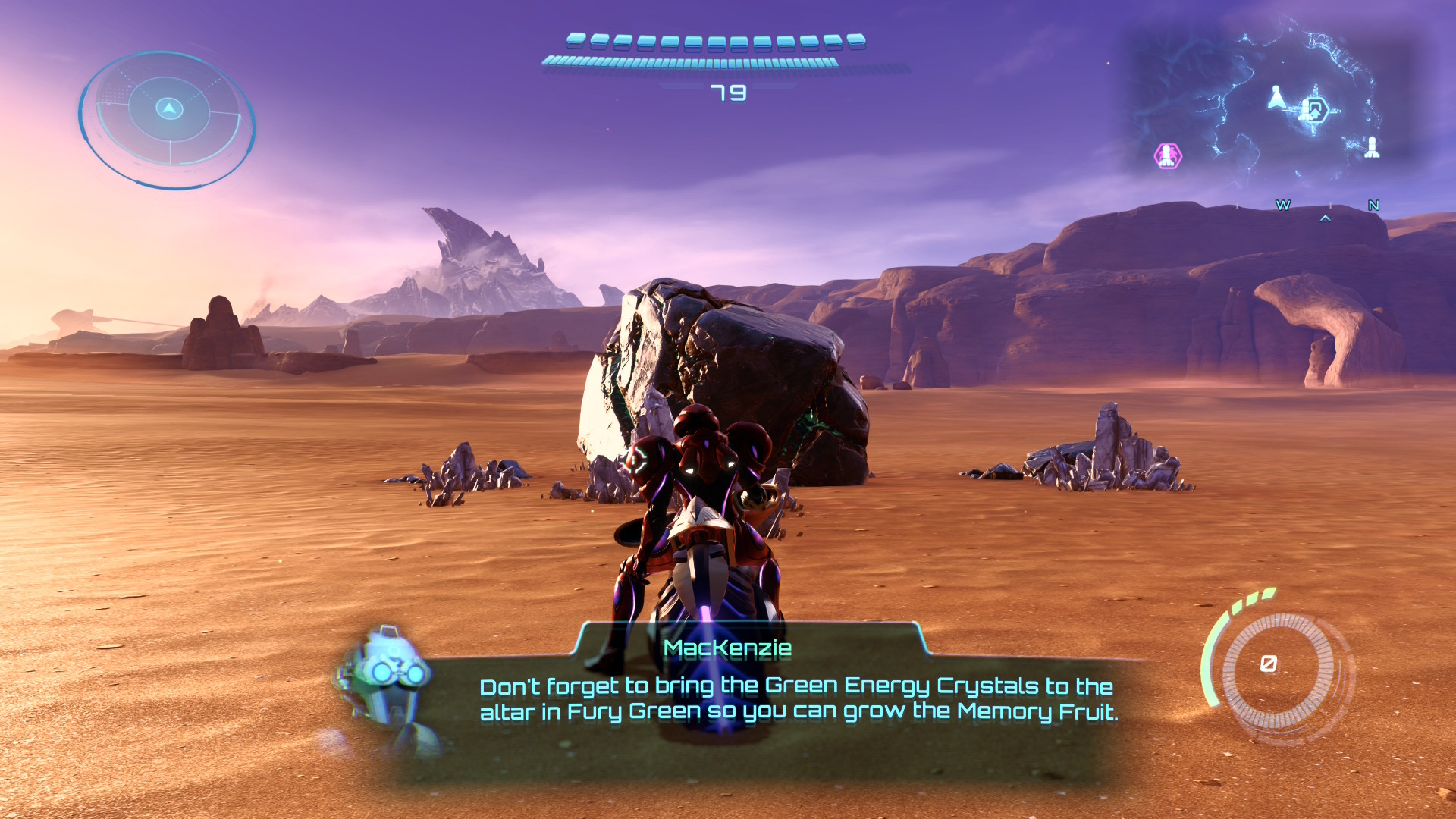
The bigger issue with these new faces is that there are times I really wish they would leave Samus alone. Any time Samus is out exploring Sol Valley, the desert overworld that connects the game’s (much more interesting) other biomes together, the player can’t go more than a few minutes without one of the characters chiming in over her radio and telling her where to go next. This is frustrating because not only did I generally not need or want this information, it sometimes had the effect of making it look like Samus needed that kind of help when her character most certainly would not. It’s one thing when the Federation troopers are actually with her in the same room, trying to assist and communicate in what could feasibly be perceived as a high-risk scenario. But when I as a player am trying to explore, immerse myself in the ambience and might want to feel a little lost, it really just ruins the moment.
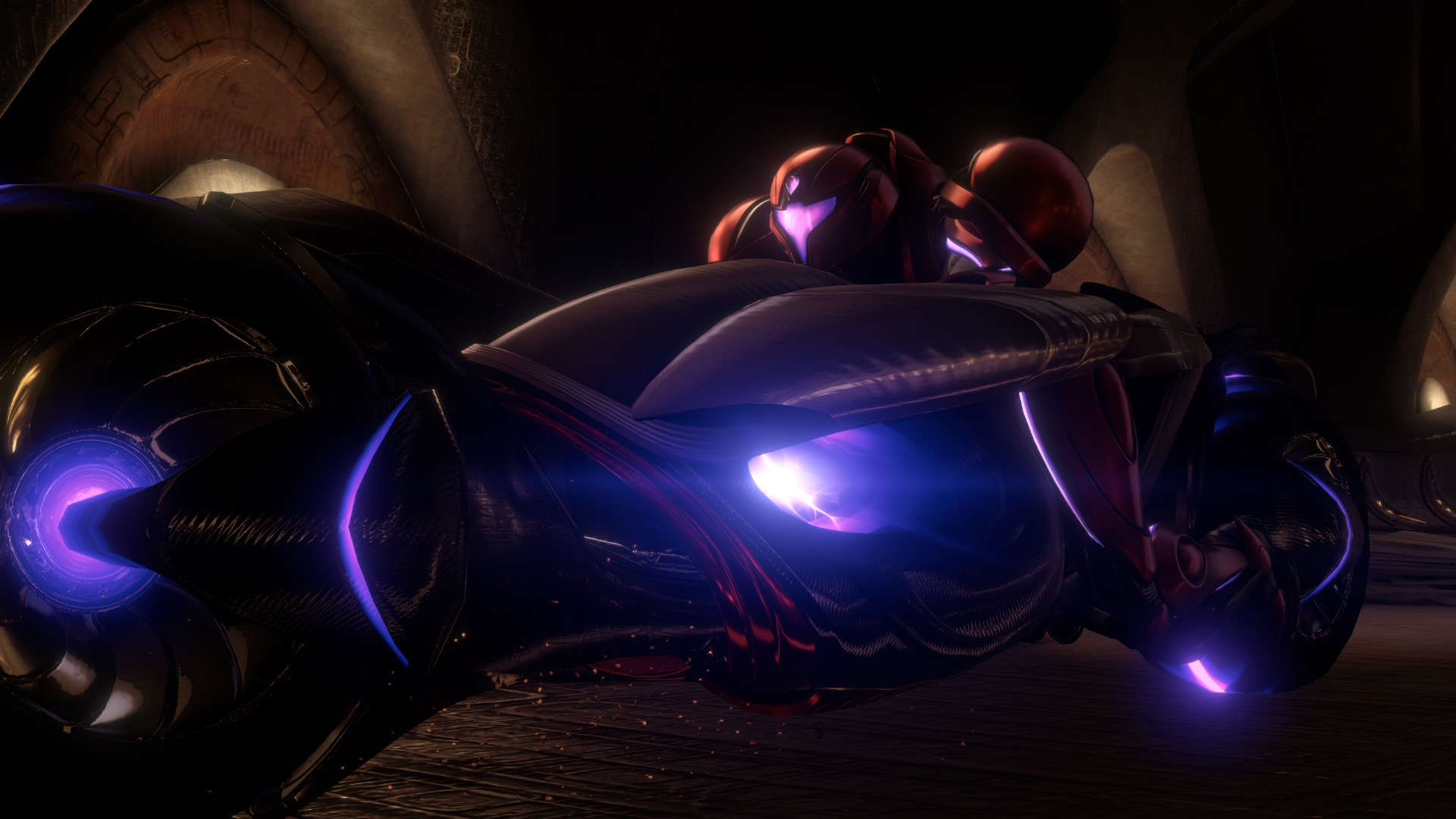
Luckily, those moments of isolation are still in the game in force, albeit less common than in the older games. I can understand why perhaps Retro Studios wanted to include the desert overworld biome of Sol Valley as the quiet connective tissue (other than the radio chatter) between these more dialogue and action-heavy biomes. As mentioned earlier, I appreciate them trying to build out Viewros in a more “logical” way so to speak, rather than just having everything connected by elevators. It’s really not a concept I’m inherently opposed to. And Sol Valley isn’t completely barren. Some of Samus’ upgrades are hidden in the debris scattered across it, or in underground ruins that play out like mini puzzles. It’s admittedly pretty fun to zip over the sand dunes on her motorcycle (weirdly name Vi-O-La), even if it always feels a little out of place doing something so arcade-y in a Metroid game.
Visually, though, Sol Valley is probably one of the least interesting videogame desert biomes I’ve traversed across in recent memory. There are barely any landmarks or interesting terrain, so as a zone in a Metroid game, it’s very forgettable. Worse, though, are the hundreds of green crystals scattered across it that Samus has to constantly break and collect in order to beat the game. Even if you heed the game’s advice and start collecting them early on, it’s just boring to do so. Unlike, say, collecting Moons in Super Mario Odyssey, or finding Koroks in Breath of the Wild, there’s no challenge or skill involved. It’s a mindless collectathon that adds nothing to the game, and feels like a way to pad out the runtime.
The most frustrating part, though, is that all those upgrades to Samus’s suit and abilities that are scattered across the desert generally can only be collected at very specific points in time. Yes, with this being a Metroid game, some level of backtracking is normal, and I welcome it! But there’s a difference between something being gated behind an occasional cleverly-placed obstacle that needs to be revisited later, versus a bunch of upgrades that can be approached at any time in an open world but that can only be collected in the final hours of the game. It’s difficult to explain, but while there’s an appearance of nonlinearity to Sol Valley, the reality is that much of it is an illusion and there’s actually every little to do until the game explicitly wants you to do it. Imagine if 8 out of every 10 shrines Link approached in Breath of the Wild couldn’t even be entered the first time they’re stumbled across, and you’d begin to understand why this would be frustrating.
This is but a symptom of a bigger issue with Metroid Prime 4, which is its feeling of linearity. It’s true that most Metroid games have some degree of linearity to them, as again, these games are designed with some level of backtracking in mind to create a sense of progression and exploration. Metroid’s non-linearity, to me, has always felt like a half-truth, but it works in the other Metroid Prime games because of how the maps are designed. All of the previous games have had regions that feel maze-like to a degree, where the maps weave into themselves like a big puzzle that is waiting for you to solve it. While there’s generally an ideal way to go about it, it often doesn’t feel that way, and that’s part of what made older games in the series so captivating.
Metroid Prime 4 doesn’t pull that trick off. Somehow, despite the sweeping vistas, most of the biomes in the game feel weirdly small and simple, and so that illusion of exploration is never really manifested. Rather than interconnected mazes, most of the regions in Prime 4 feel more like a straightforward selection of hallways. You’ll eventually make it to the end of each area, fight a boss, and then return to the exit. The optional upgrades that you can return to collect later are, more often than not, not very far at all off the beaten path. It doesn’t change the fact that the world in Metroid Prime 4 feels more like a real place than ever before, but it does make for a less interesting game. What once felt like a true first person adventure now feels more like a first person shooter with the occasional bonus room to enter, and that’s a bummer.
So, yes; there are some aspects of Metroid Prime 4 that disappointed me, that didn’t quite live up to the standard set by previous games, or that tried something new and didn’t fully hit the mark. It’s not easy to take a style of game that existed on the GameCube in nearly perfect form and evolve it while also retaining everything that players love; I don’t envy the task. But for all this game’s flaws, the things it does well, it does really well. For as many moments that didn’t land for me, I can think of many more that did.

Metroid Prime 4: Beyond is a captivating return to Samus’ first-person adventures that transports players to a visually stunning new planet filled with impressive locations, exciting combat encounters, and a convincing sense of immersion that sucked me into its world. It’s a showcase for Nintendo Switch 2 that’s peppered with top-tier boss fights, some fun new mechanics, and unmatched atmosphere. While the game’s greater focus on plot and character interactions didn’t resonate with me, and though the disappointing map design and lackluster pacing feels like a notable step back from the high bar set by earlier games in the series, Metroid Prime 4 manages to pull its less-successful ideas together alongside strong moment-to-moment gameplay. The and result is Metroid Prime game that still managed to entertain me after all these years, despite some rough edges. By the time I rolled credits, I was grateful for the journey I experienced, and excited to see where Samus might go next.
Metroid Prime 4: Beyond copy provided by the publisher for the purposes of this review.


