Submit a news tip


News

It’s been a long wait, but SEGA has finally launched four new 3D Classics on the Australian 3DS eShop. 3D Outrun, 3D Fantasy Zone, 3D Fantasy Zone 2 and 3D Thunder Blade are all available as of now. Pricing is set at $6.50 each.

Source

Bandai Namco shared new screenshots and art from Project X Zone 2 today. Take a look at the latest images below.

Atlus held a second live stream for Etrian Odyssey 2 Untold: The Fafnir Knight last night. You can now see the complete recording below.

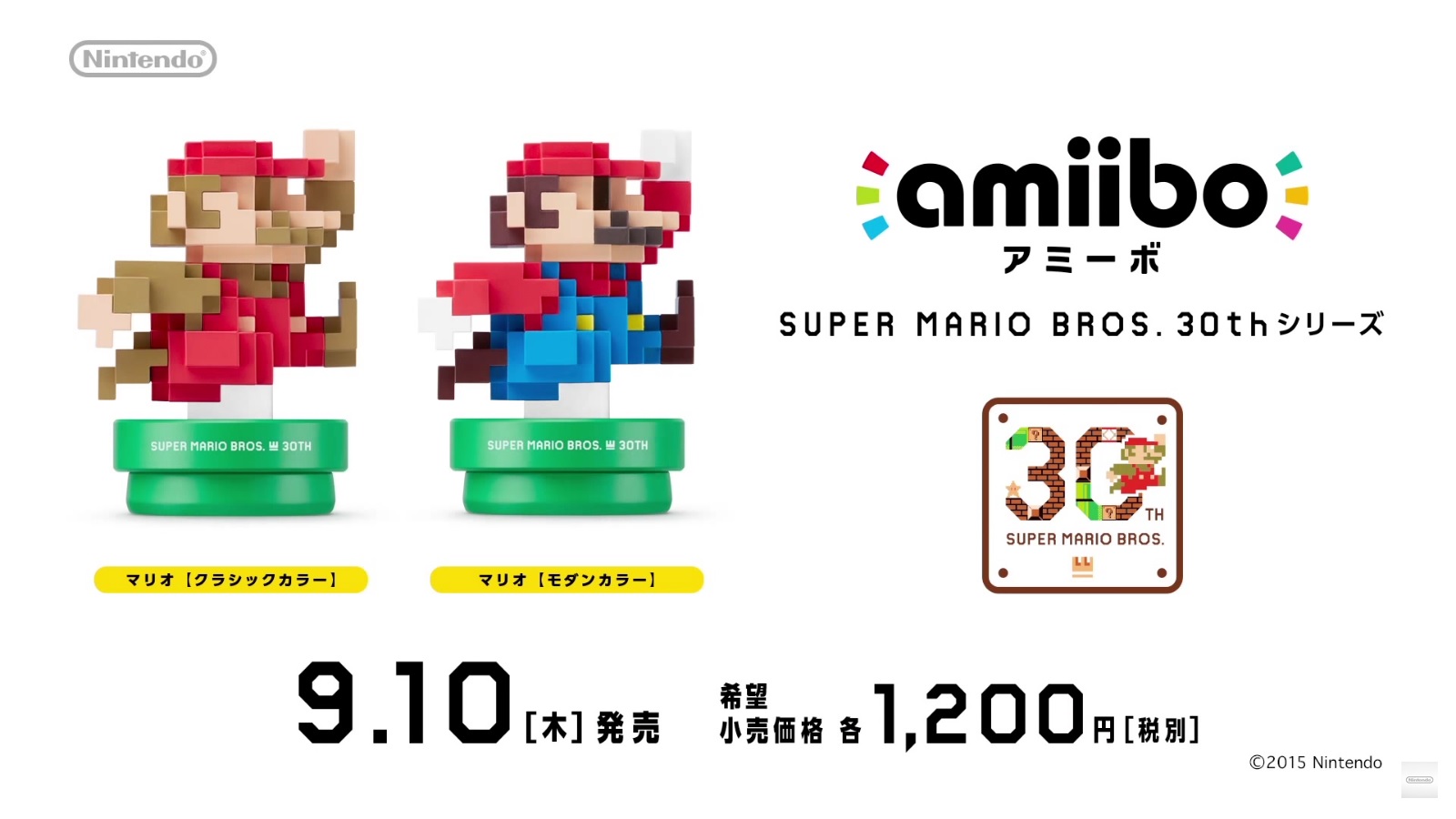
Nintendo has revealed the Japanese packaging for Animal Crossing’s second volume of amiibo cards. Take a look at it above.

Source

More: ,

EnjoyUp Games brought Funk of Titans to the North American Wii U eShop on May 14. In Europe, the game is slated for release on July 9. Pricing is set at €8.99

Source

Amazon Japan has shared the official boxart for Pro Yakyuu Famista Returns. Check it out above.

We also have the first screenshots from Pro Yakyuu Famista Returns, which are in the gallery below. Access the official site here.

Source

Nintendo president Satoru Iwata opened up on the company’s handling of the Virtual Console during the latest shareholders meeting.

Iwata explained that creating Virtual Console titles “require detailed manual work, such as testing if the software runs smoothly on each platform, or making sure the content is appropriate under the various standards currently in place.” Although some fans say that Nintendo tends to release classic games slowly, it’s difficult to speed up the process since doing so would take up resources for brand new titles.

Nintendo is “currently researching how we can efficiently develop Virtual Console titles with limited human resources.” Iwata also pointed to one big issue, which is “how to resolve the situation in which we can only release a few Virtual Console titles at a time when we release new platforms.”

Read on below to check out everything Iwata stated about the Virtual Console.

Regarding your question on the scale of Virtual Console title sales, the download sales as a whole for this (75th) fiscal year are 31.3 billion yen, and I have shared publicly that this is a 30 percent increase from the last fiscal year, but we have not disclosed the individual sales of Virtual Console titles only.

Virtual Console itself is a service that began when we developed Wii so that consumers can play past titles on new platforms, and we continue to distribute various titles now. However, back when we started this service, there were some points that we could not sufficiently foresee about how big this business would grow to be and how the business would expand. For example, Virtual Console titles are generally developed based on the original game software, but this does not mean that we can develop numerous Virtual Console titles simply if we have the original game software. Development of Virtual Console titles require detailed manual work, such as testing if the software runs smoothly on each platform, or making sure the content is appropriate under the various standards currently in place. Thus, we occasionally receive opinions that our pace of releasing new Virtual Console titles is slow, but if we use much of our human resources on such detailed manual work, we would not be able to develop new titles, so we are currently researching how we can efficiently develop Virtual Console titles with limited human resources. One of the big issues for our system development is how to resolve the situation in which we can only release a few Virtual Console titles at a time when we release new platforms.

In addition, regarding the possibility of making all titles available on Virtual Console, I can say that it is possible for Nintendo titles with a few exceptions, since we generally have the intellectual property rights for such titles. However, as to third-party software publishers’ titles, if they are producing the software based on a license from another copyright holder, for example, we may not be able to easily use the same title for the system that exists now because we do not have a license from the copyright holder at the time. This often becomes a problem with reruns of TV shows or Internet broadcasting. Therefore, since we can only release Virtual Console titles of third-party software publishers if they come to an agreement with the copyrights holders upon negotiating terms and conditions that were not included in their original contract, please understand that there are some titles that we cannot easily release despite many requests. We will make our best efforts to satisfy our consumers with our Virtual Console title lineup.

Source

We now have Nintendo president Satoru Iwata’s full comments regarding character licensing collaborations. While it’s unclear what sort of ideas the company has in mind, Iwata expressed openness to things like movies/TV programs.

Here’s everything shared by Iwata:

This answer overlaps with what I discussed in my answer about IP utilization earlier, but it would be a stretch to say that Nintendo was proactive in making merchandise in the past. We have been discussing internally that we should be more proactive, and it is imperative that we establish a global structure to deploy such business all around the world. As a large proportion of our sales come from outside Japan, we have various ideas in mind for collaboration on the character licensing business across Japan, North America and Europe. And this expansion won’t be limited to merchandise; it may take various forms including, for example, images or even movies or TV programs. Even though I am not sure of the actual forms, it is safe to say that in addition to profitable licensing businesses, Nintendo will take risks we believe are worthwhile. On the other hand, not a small number of businesses have ended up with a pile of leftover stock after a particular product’s short-lived period of popularity. It would surely ruin the value of Nintendo IP and would not enhance corporate value over the long term if we chose this path. Therefore, I would like to recap that our current plan is not to simply increase the number of proposals but to be more proactive than in the past by making appropriate decisions that will enhance our overall corporate value over the long term.

Source

Nintendo is not sharing any specifics about its next system – tentatively known as NX – until next year. There’s a reason for this.

Nintendo president Satoru Iwata, speaking at the company’s latest shareholders meeting, explained that revealing details early “could also give other companies the opportunity to come up with counterplans or implement the ideas that they find interesting.”

Iwata also touched on plans for Wii U and 3DS following NX’s launch. Even when the new system hits the market, we can apparently expect continued release for the two platforms.

Below are Iwata’s comments in full:

As I mentioned earlier, I cannot speak about the details of NX today. If I mention every detail of what we are newly thinking, it could be persuasive but it could also give other companies the opportunity to come up with counterplans or implement the ideas that they find interesting. There may also be the possibility that it will spoil the sense of surprise for consumers. Of course these factors are all against the interest of the entire company and they would ultimately harm the interest of our shareholders, so we appreciate your understanding in this respect.

Regarding your concern about what will happen to Wii U or what will happen to Nintendo 3DS, NX is a new platform, so the installed base will have to be built up from zero. When NX is launched, there already will be a certain volume of Nintendo 3DS and Wii U hardware widely existing in the market, so from a software business perspective, it would be highly inefficient to stop releasing titles for Nintendo 3DS or Wii U right after the launch of NX. Therefore, while we are preparing NX for the future, we are discussing within our internal development teams as well as with the second-party developers we co-develop software with and also with third-party software publishers about how to continue creating software for Wii U and Nintendo 3DS. So, I believe that your point of concern should not happen immediately. As for Wii U, we will continue to make efforts, as it is a priority within the company to think about how we can satisfy the consumers who purchased this system to the maximum extent possible.

Whereas Nintendo’s E3 showing was generally well-received in 2014, the same can’t be said of this year’s event. A number of fans have expressed disappointment in terms of what Nintendo brought to the table during its latest Digital Event last month.

Nintendo president Satoru Iwata and Shigeru Miyamoto both addressed the reaction to the company’s E3 2015 presence at a recent shareholders meeting. The two of them noted the following:

Iwata:

E3 this year was held a week later than it has been held in the last few years, and it was held right before our general meeting of shareholders. Including the preparations for this meeting, I prioritized my works in Japan and did not travel to the U.S. to attend E3. As a representative of our board of directors who attended E3 this year, I would like to ask Mr. Miyamoto to talk about it. There will be a video that I would like to show afterward.

Shigeru Miyamoto (Senior Managing Director and General Manager of Entertainment Analysis & Development Division):

E3 is the annual industry trade show that is usually held around May or June in the U.S. It is true that E3 has the aspect that the shareholder just mentioned. It actually started as a trade show for the U.S. market, and due to the spread of the Internet, the information dispatched at E3 spread around the world. Nintendo views E3 as not only an industry trade show in the U.S. but also as an occasion with which the entire Nintendo group should be involved.


Manage Cookie Settings